An English version is provided below. I have used AI assistance for the translation, but I have checked the text myself.
10月31日、土曜日。ハロウィンの夜、ロンドンのユーストン駅は大混乱だった。
ケンブリッジからロンドンまでは順調に戻ってきた。ところが、ランカスターへ向かう予定の列車が運休になった。電光掲示板には赤い「Cancelled」が並び、ホームへ通じる通路には、荷物を抱えた人たちが溜まっている。約1時間後の別の列車に乗ることになったが、急にグラスゴー行きの列車が動くというアナウンスが流れると、人々は一斉にホームへと駆け出した。
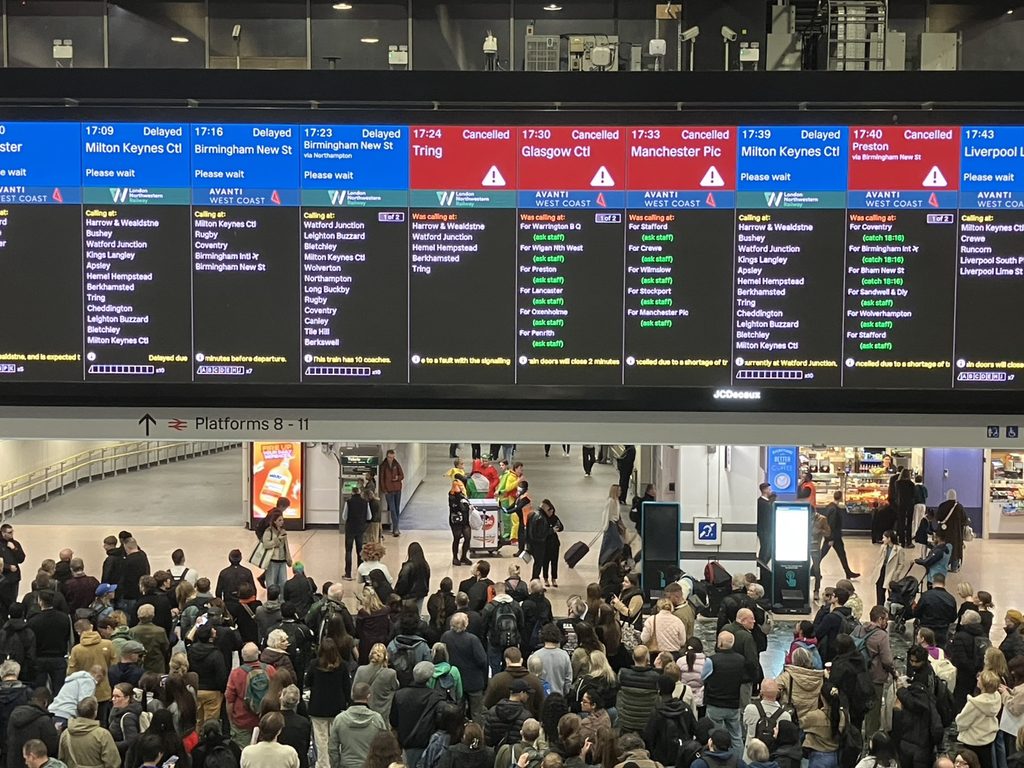
ロンドン・ユーストン駅。電光掲示板には運休と遅延が並んでいた。
誰かがゲートを開けっぱなしにし、チケットのチェックもないまま列車へと走る人々。
私も何とか乗り込めたものの、車内もなかなかの有様である。予約席の表示は「Available」に切り替わり、誰がどこに座るのかをめぐってあちらこちらで言い争いが起きている。通路には立っている人がぎっしり。犬を連れた人も、小さな子どもを連れた人もいる。ドアが閉まってからもなかなか発車せず、結局、動き出したのは30分ほど後だった。
片側のトイレが故障しているらしい。子どもを連れたお母さんが、人で塞がった通路を何度も謝りながら進んでいく。外では息が白くなるほど冷えているのに、車内は暑い。身動きが取れず、上着すら脱げない人もいる。苛立つ人がいる一方で、通り道を譲り、声をかけ、荷物を動かして助ける人もいる。
こういうとき、妙に人間がよく見える。もっとも、見えるからといって、身動きが取りやすくなるわけではない。
私はもともと予約していた席に座ることができた。しかし狭いし、周囲のイライラを感じて目を瞑っていることもできない。窓側の席だし、人が多すぎて、立っている人と交代することもできない。どうせなら、書きそびれていた英国滞在記を書こうと思い立った。
実は、渡英7か月目にあたる10月は、ずいぶん研究に集中できた月だった。ドイツへの出張に始まり、国際学術誌への論文投稿が2本、英語での発表が2つ。シェフィールドでの資料調査、グラスゴーのストラスクライド大学での講演、そしてケンブリッジでの研究交流もあった。その合間には、査読や執筆中の書籍の校正にも取り組んだ。分担執筆を担当した書籍も1冊出版された。査読も複数引き受けた。
こうして並べると、よく働いたように見える。実際、自分なりにはよく働いたと思う。
ただ、全てが成果に繋がるかどうかは別の話である。投稿した論文は査読を待つ身だし、共同研究も多くがまだ進行中である。投稿済みのものについては、あとは果報を寝て待てということなのだろう。最近はその「寝る」がなかなか難しいのだけれど。
一つずつ書けばそれぞれ面白い話になりそうだが、まだ途中の仕事を結論のように語るのも早い気がする。シェフィールドでの資料調査については、別にまとめ、学会のニュースレターなどへ寄せたいと考えている。
そこで今日は、ひとまず一区切りついた仕事の話を書きたい。とはいえ、その前に、いま帰ってきたばかりのケンブリッジのことを少し。
今朝は、霧の立ち込めるケンブリッジにいた。
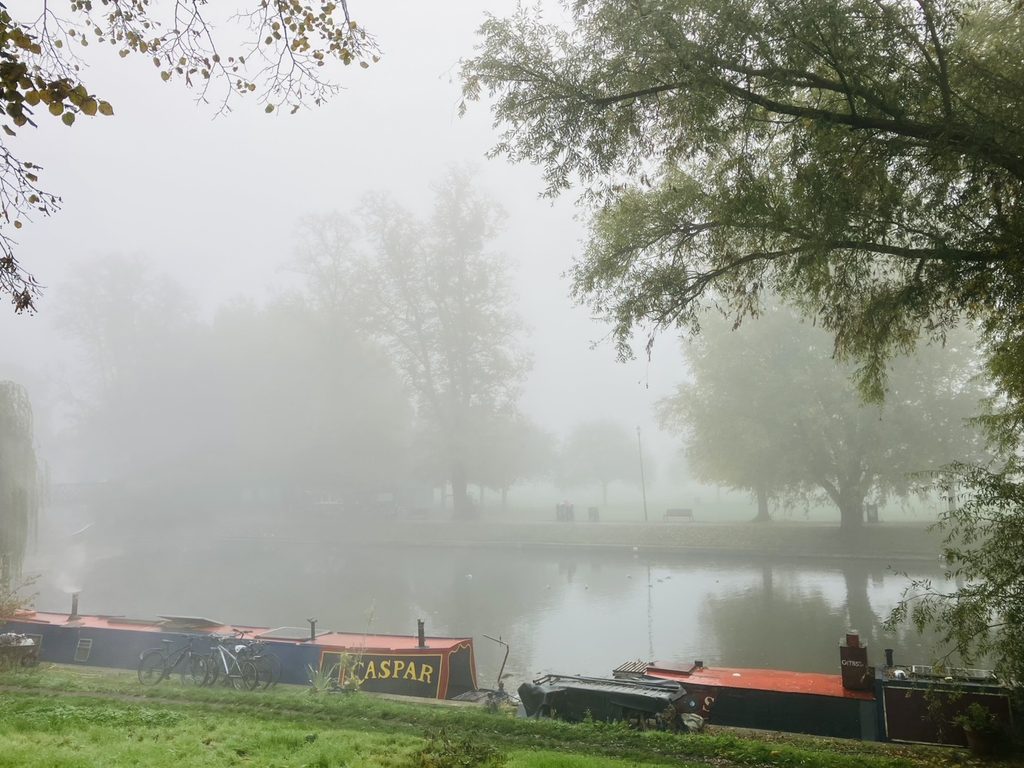
朝霧に包まれたケム川(River Cam)。
ケム川(River Cam)の水面がほとんど見えなくなるほど、白い霧が川沿いの木々を包んでいた。この川に架かる橋が、ケンブリッジという街の名前にも結びついている。しばらく立ち止まって眺めていると、昨晩まで歩いていた大学街が、別の場所のように感じられた。
街には、大学の歴史を感じさせる建物がいくつもある。キングス・カレッジの前に立つと、石造りの細かな装飾をただ見上げることになる。少し離れた丘からは、秋の木々の向こうに街の屋根と塔が見えた。
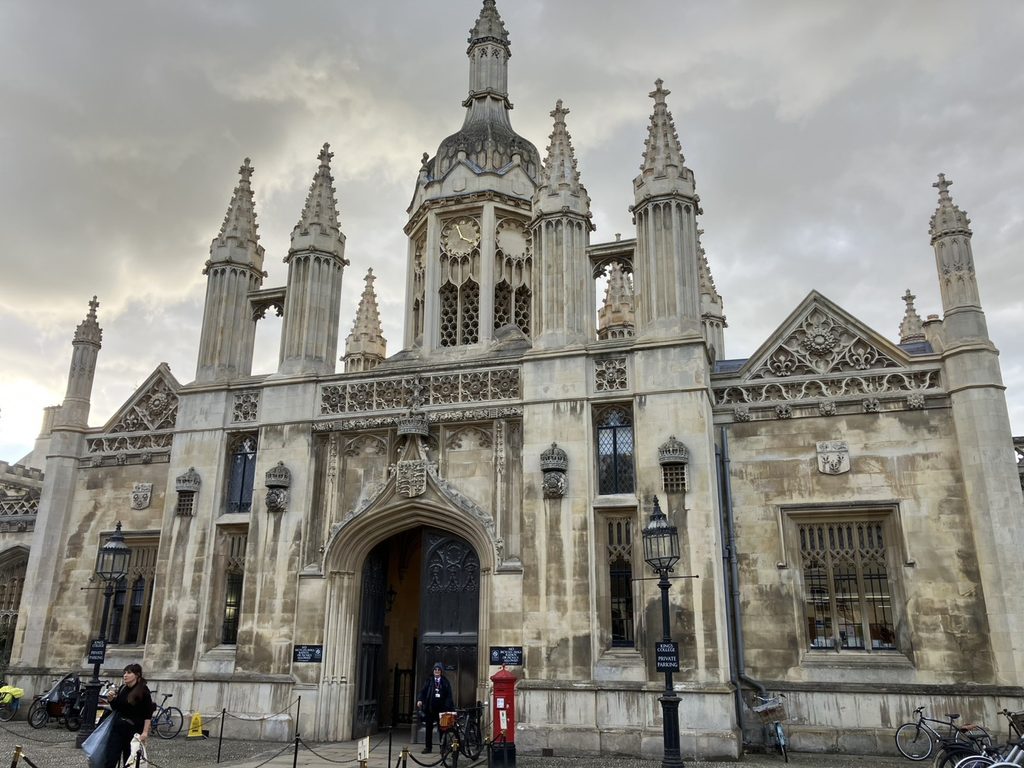
ケンブリッジのキングス・カレッジ。
通りを歩けば、どこにでも研究の逸話が転がっている。パブのThe Eagleには、1953年にFrancis CrickとJames WatsonがDNAの二重らせん構造を解明したことを語った場所だと伝えるプレートがあった。「生命の秘密を発見した」という有名な話である。
もちろん、その発見が二人だけの仕事ではなかったことも、いまではよく知られている。Rosalind Franklinをはじめ、多くの研究者の蓄積があってのことだった。記念プレート一枚にも、研究史の続きを書きたくなるのは、どうも研究者の性分らしい。
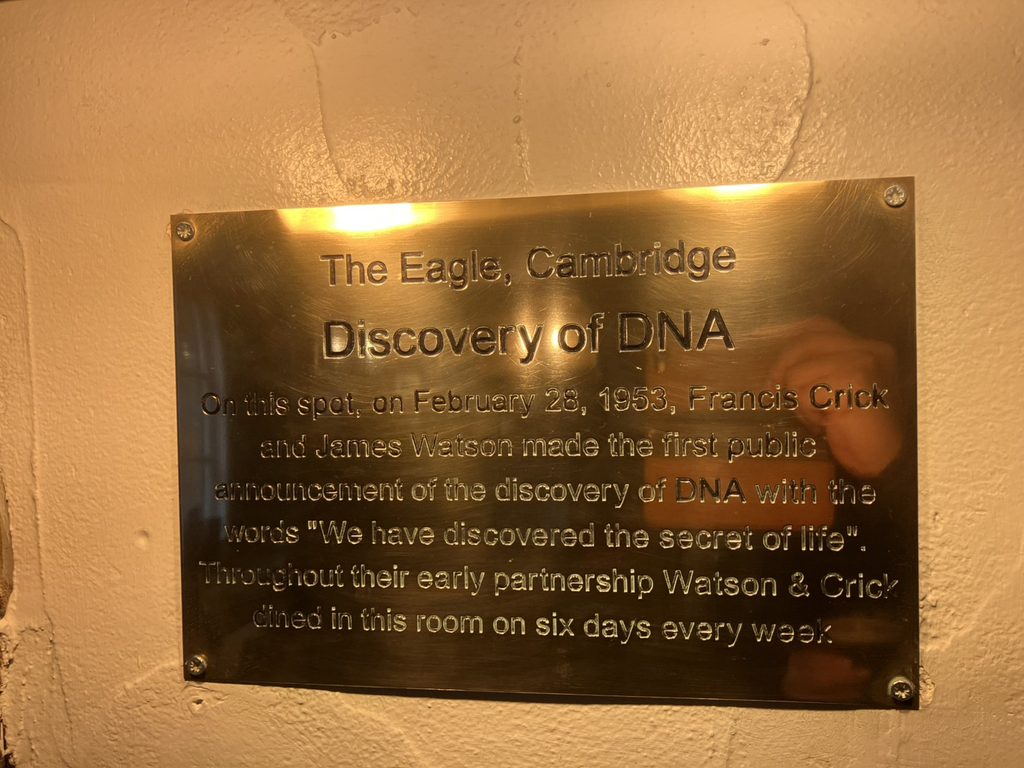
パブThe Eagleに残る、DNAの二重らせん構造の解明を伝える記念プレート。
先輩が昨年までプレーしていたというラグビー場にも立ち寄った。
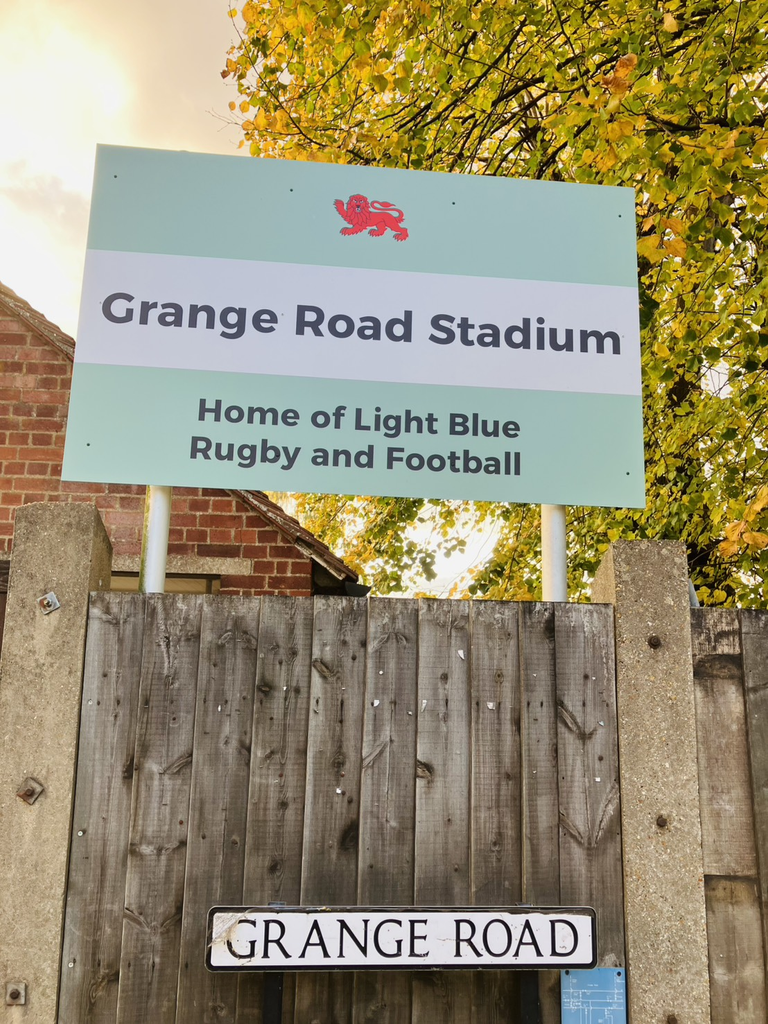
Crange Road Stadium
メイングラウンドは塀に覆われていて、手を伸ばさなければ写真を撮ることもできなかったけど、サブグラウンドには懐かしいスクラムマシンがあった。ここで先輩がプレーしていたことに思いを馳せた時、芝と土の混じった匂いがしてとても懐かしくなった。
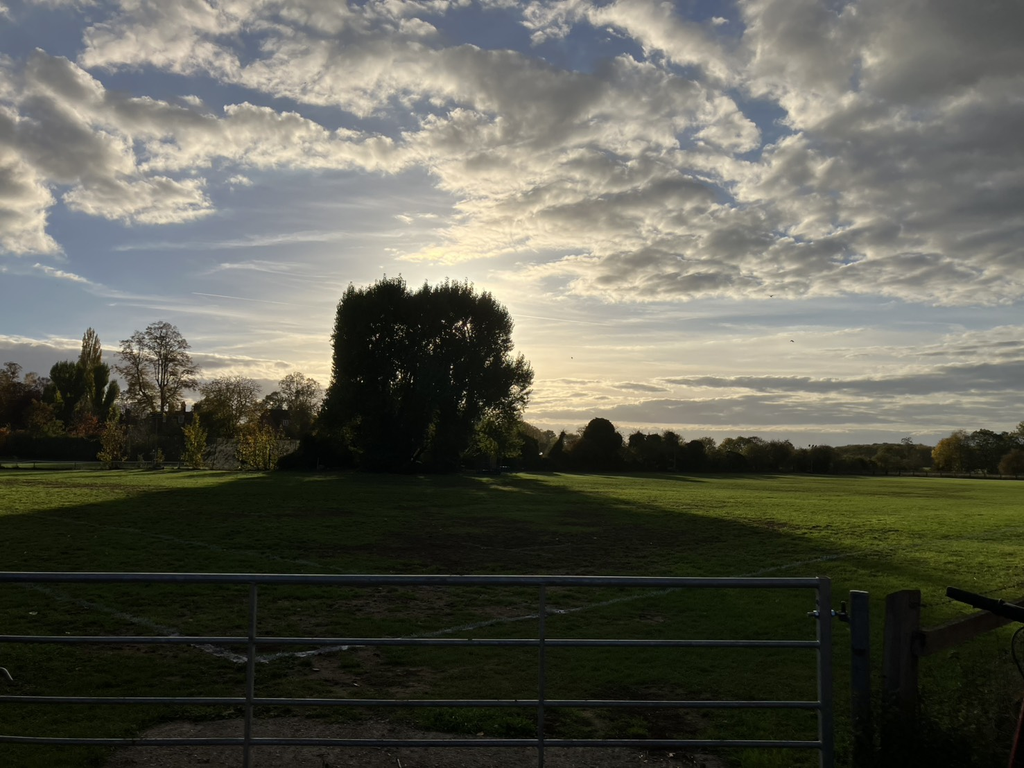
土の匂いはいつでも私を高校時代に呼び戻す
小さな宿には、模様の入ったカーテンとクッションが置かれた、一人用のかわいらしいベッドがあった。街の菓子店Fitzbilliesでは、シロップでつやつやした名物のChelsea Bunが並んでいた。
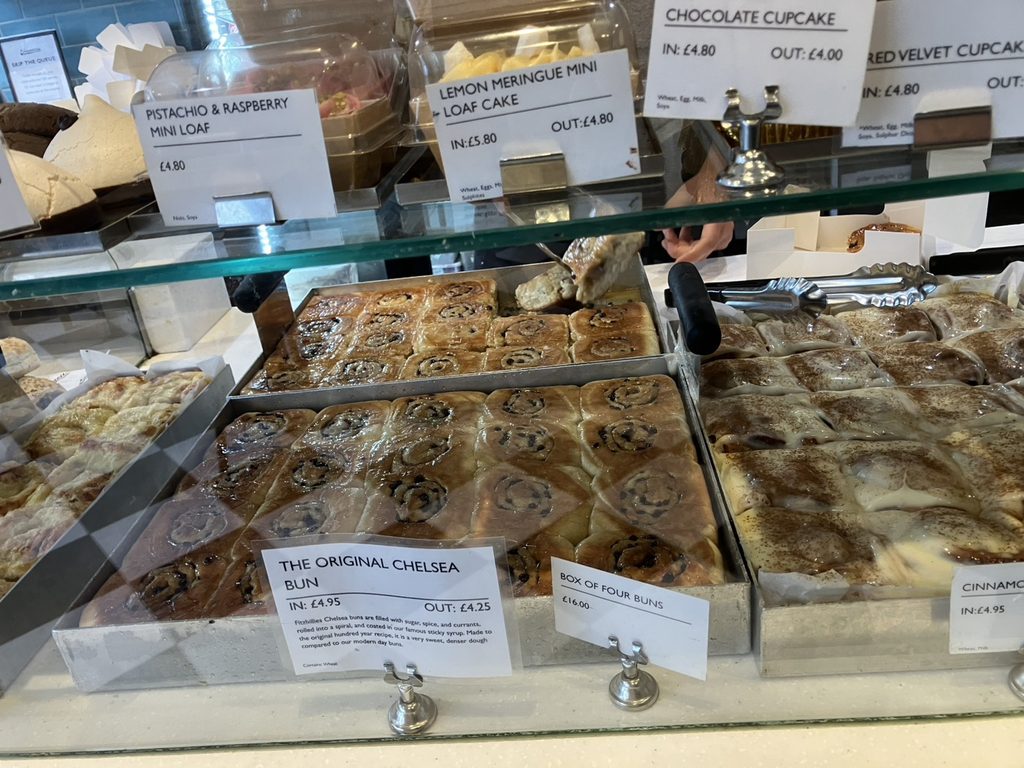
Fitzbilliesのショーケースに並ぶChelsea Bun。
歴史ある街というのは、ともすると「偉人が何をしたか」ばかりを気にして歩きたくなる。けれど、そこに暮らしてきた人たちにも、仕事があり、食事があり、友人と集まる場所があったのだろう。大学のある街も、結局は人が生活する街なのである。
そして今日、ニューナム・カレッジ(Newnham College)で、忘れがたい研究交流の時間を過ごした。
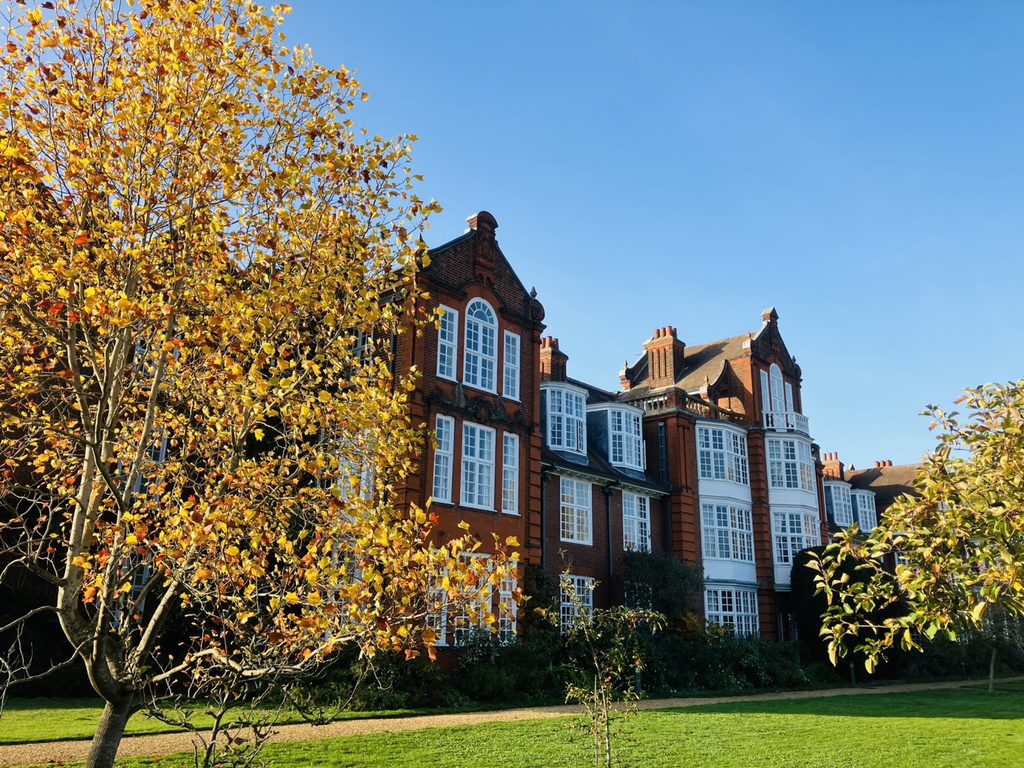
研究交流の舞台となったニューナム・カレッジ。
ケンブリッジの先生、そしてロンドンの大学からいらした、ある学会の会長を務める先生と、日本の綴り方教育について4、5時間にわたって議論した。
夢のように贅沢な時間だった。
私の研究は、芦田恵之助をはじめ、近代日本の作文教育が、子どもの自己表現をどのように捉えてきたかという問いから出発している。「自由に書く」と言うのは簡単だが、子どもが自分の生活を書くための言葉はどこから来るのか。教師は表現を支えると同時に、その表現のあり方を方向づけてはいないか。
日本語でさえ説明に骨の折れる問題を英語で考えると、自分が何を分かったつもりになっていたのかが、しばしば露わになる。「綴り方」という言葉一つをとっても、単なるwritingでは片づけられない歴史がある。
だからこそ、異なる研究の蓄積を持つ人と、急いで結論を出すことなく話せる時間がありがたい。議論を重ねるほど、自分が知っていることより、まだ考えなければならないことの方が増えていく。
写真も何枚か撮った。しかし、人が写っている写真をそのまま公開するわけにもいかず、ここでは建物だけを載せることにした。研究の素晴らしさは人の顔によく表れているのに、肝心の写真は出せない。コンプライアンスは大事である。大事なのだが、少々惜しいし寂しい。
このケンブリッジ訪問に先立つ10月28日には、グラスゴーのUniversity of Strathclydeで、英国教育哲学会(Philosophy of Education Society of Great Britain)の支援を受けて講演する機会をいただいた。
タイトルは、”Transforming Others? Education, Intervention, and the Problem of Otherness”。「他者を変えること」を問い直す講演である。
教育者は、子どもが変わることを願う。しかし、その変化を「よくなった」と判断するのは誰なのか。私は今年、自分が5歳のとき先生に言葉を書いてもらった母の日の絵や、9歳で「遊んでばかりいたから勉強しよう」と記した作文、芦田恵之助の綴方教育を手がかりに、この問いを考えてきた。
今回はさらに、現代の小学校の実践研究へ話を進めた。地域を探検した子どもが、「知ることは増えたけれど、好きになることはそれほど増えていない」と気づく。子どもの発言を受けて教師や研究者が授業を組み替えるとき、それは子どもの声を大切にしたことになるのか。それとも、大人がその声を自分たちの教育目標へ引き寄せたことになるのか。
もちろん、二つは簡単には切り離せない。「子どもと一緒に変える」と言っただけで、教育する側の力が消えるわけではない。研究者自身もまた、現場へ働きかける一人だからである。
平和村での話題提供から続くこの問いを、今度は教育哲学の研究者たちの前に置いてみた。話しながら、歴史研究と実践研究を別々に進めてきた自分のなかで、ようやく接点が見えかけている気がした。もっとも、「見えかけている」というところが重要で、まだうまく言葉にならない部分も多い。
そんな10月に、もう一つ嬉しい仕事が形になった。
TRIADEから、研究誌『国語教育の理論と実践 両輪』の電子復刻合本版を公開することができたのである。

電子復刻合本版『両輪』。写真は第6巻の表紙。
『両輪』は、浜本純逸先生に国語科教育を学んだ実践家や大学院生たちが中心となり、1986年に結成した「両輪の会」の研究誌である。理論と実践を、車の両輪のように結びつけたい。そんな思いを名前に込め、学校種や所属を越えた人たちが月例の研究会や合宿を重ねた。その成果は、1989年の第1号から2004年の第42号までに収められている。
内容も興味深い。子どもたちの姿をよく見ながら、教材を工夫し、単元を組み立てていく実践報告がある。新しい言語学の知見を国語科の授業へ生かそうとする研究もある。学習指導要領の改訂や「新学力観」が論じられていた時代に、現場で何が問われ、何が試みられていたのかが伝わってくる。
この仕事のきっかけをさかのぼると、2024年5月、鹿児島で開かれた全国大学国語教育学会の課題研究の打ち上げに行き着く。
……と書いたところで、これはこれで長い話になることに気づいた。いずれ改めて書きたい。
ひとまず言えるのは、多くの方が時間と労力を寄せてくださったおかげで、かつての「幻の雑誌」を、いま改めて読むことのできる形にできたということだ。関わった方々には、それぞれの思いもあるだろう。それでも、まずは多くの人に喜んでいただけたことが嬉しい。私もその仕事の端に加わることができて、本当に幸運だった。
刊行された当時の研究誌には、その時代の研究者や教師たちの、まだ形にならない問いが残っている。いま読むと、考え方が古くなっている部分もあるはずだし、逆に、こちらがまだ十分に受け取れていない問いもあるはずだ。
それらを無理に今風の言葉へ直さず、その時代の文章としてもう一度読めるようにする。電子復刻とは、過去の知恵を「正解」として保存する仕事ではなく、別の時代の読者がそこから考え始められるようにする仕事なのだと思う。
この春から、英国でいくつもの研究会に参加した。こちらでは「日本の綴り方教育とは何だったのか」と問われ、日本では電子復刻した『両輪』を通して過去の研究者や教師の営みに触れる。時代も場所も違う人たちの問いが、いまの私の机の上で出会っている。
考えてみれば、雑誌が刊行された1989年は、私が生まれた年でもある。最終号が出た2004年には、私はまだ中学生だった。その頃に学校で起きていたことを、いま歴史として読むようになった。
時間というのは、案外、不思議なつながり方をする。
さて。ここまで書いて、また電車のなかへ戻る。
通路は相変わらず混み合っている。誰かが足をずらし、誰かが荷物を持ち上げる。車内の暑さは変わらない。何時間も話してきたケンブリッジの午後と、各地へ散っていった共同研究者の先生方の顔が、ようやく少し遠くなってきた。
私の手元には、まだ返事の来ていない論文がある。これから書く本もある。今回のケンブリッジで受け取った問いも、すぐに論文になるわけではないだろう。
一方で、『両輪』のように、時間をかけてようやく人の手に渡った仕事もある。
十月は秋だった。成果が出たものも、まだ芽が出るか分からないものも、ひとまず自分の手元に並んでいる。願わくば実りの秋に、という気持ちはある。ただ、収穫時期をこちらで決められないものばかりだ。
…私が列車に乗り込み、この文章を書き始めた頃、息子たちは骸骨の衣装を着て、ハロウィンを楽しんでいた。写真の二人は袋を提げ、満足そうに立っている。別の日の車内では、何がそんなにおかしいのか、二人で顔をくしゃくしゃにして笑っていた。
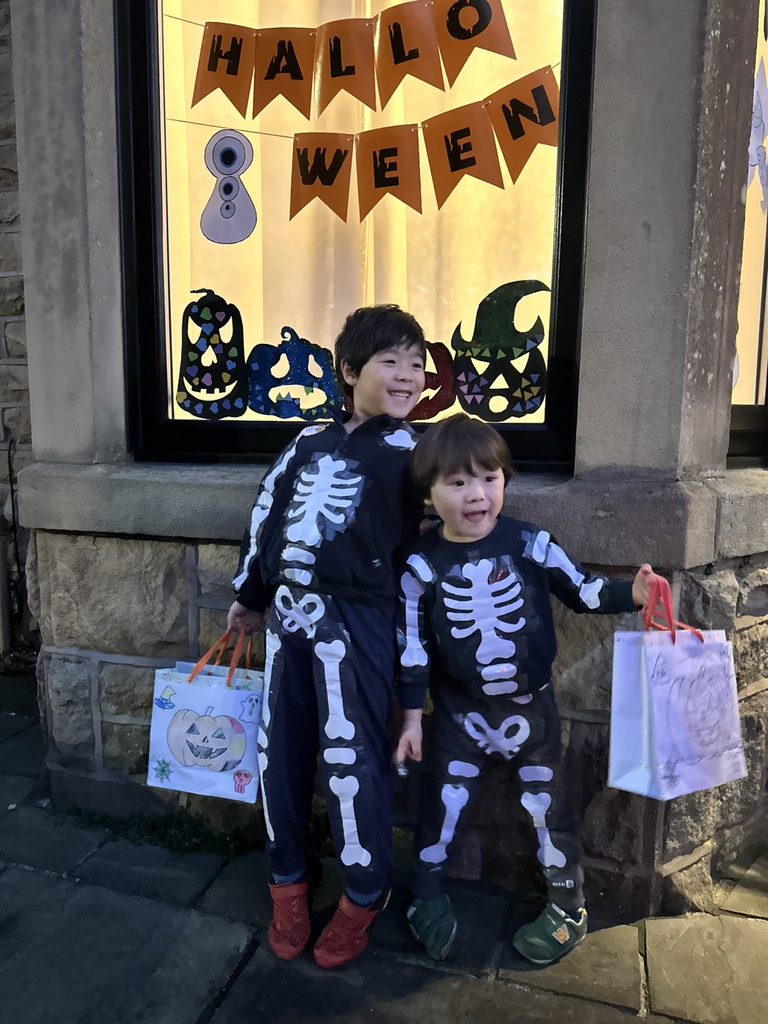
ハロウィンを楽しむ二人。
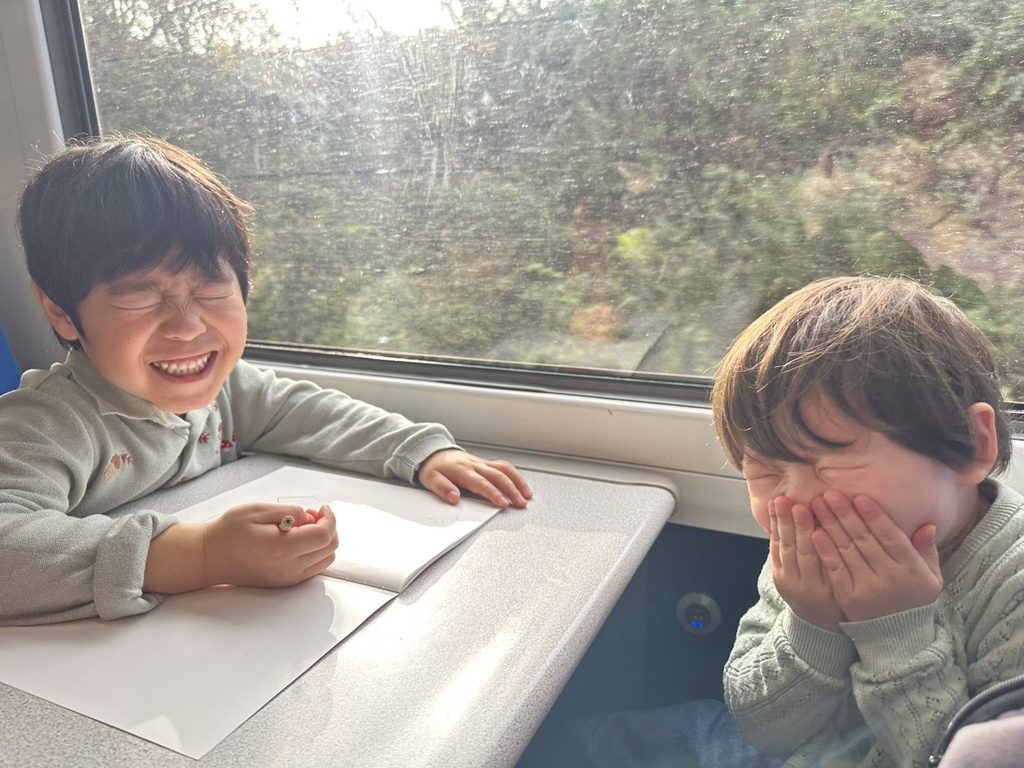
移動中の車内で笑い転げる兄弟。
私にとっても、さすがに今日は長い一日だった。
列車の窓の外は暗い。ようやく動き始めた電車のなかで、何とかここまで書いた。
今日中にランカスターに、家に着くことはできるだろうか。日をまたげば、明日はもう11月。
(ドイツで知り合った先生は、電車が遅れて、17:00ごろ家に着く予定が翌日の4:00になったとメールで私に教えてくれた。そして「まったくカフカ的な経験だったよ!」と添えられていた。)
願わくば、今夜は少し眠れますように。
Notes from My Stay in the UK, No. 11: In Hope of a Fruitful Autumn
Saturday, 31 October. On Halloween night, London Euston station was in complete chaos.
The journey from Cambridge to London had gone smoothly. But the train I had planned to take to Lancaster was cancelled. Red “Cancelled” notices filled the departure boards, and people carrying their luggage crowded the passageways leading to the platforms. I was going to have to take another train about an hour later. Then, when an announcement suddenly said that a train for Glasgow was about to depart, everyone rushed towards the platform at once.
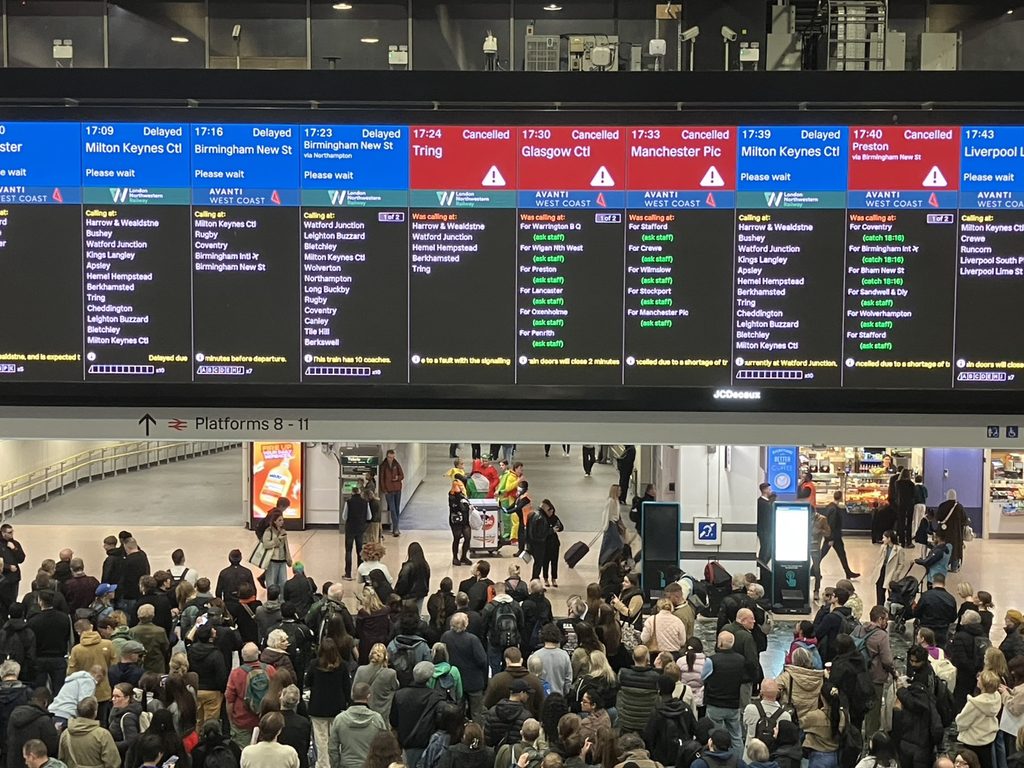
London Euston station. The departure boards were filled with cancellations and delays.
Someone had left the ticket gates open, and people hurried towards the train without having their tickets checked.
I somehow managed to board, but the scene inside was hardly any better. The displays above reserved seats had been changed to “Available”, and arguments were breaking out here and there over who could sit where. The aisles were packed with standing passengers. Some had dogs with them; others were travelling with small children. Even after the doors closed, the train did not move. It finally departed about thirty minutes later.
One of the toilets in our carriage appeared to be out of order. A mother with a child made her way through the blocked aisle, apologising again and again as she squeezed past people. Outside, it was cold enough to see your breath, but inside the carriage it was hot. Some passengers could barely move, let alone take off their coats. There were people becoming irritated, but there were also people making room, offering a word of reassurance, or shifting their luggage to help someone through.
Situations like this have a peculiar way of revealing what people are like. Unfortunately, being able to observe human behaviour does not make it any easier to move around.
I was able to sit in the seat I had originally reserved. But it was cramped, and with the frustration around me, I could not even close my eyes and rest. I was by the window, and the carriage was so crowded that I could not exchange places with someone who was standing. So I decided that I might as well write the instalment of my UK diary that I had been putting off.
October, my seventh month in Britain, was actually a month in which I managed to concentrate quite intensively on research.
It began with a trip to Germany. I submitted two papers to international academic journals and gave two presentations in English. There was archival research in Sheffield, a lecture at the University of Strathclyde in Glasgow, and scholarly discussions in Cambridge. In between, I worked on reviewing manuscripts and proofreading books in progress. A book to which I had contributed a chapter was published, and I also accepted several requests to review academic papers.
Listed like that, it sounds as though I worked quite hard. And, by my own standards, I think I did.
Whether all of this will lead to tangible results is another matter. The submitted papers are awaiting peer review, and many of the collaborative projects are still in progress. As for the papers already submitted, all I can do is wait and hope for good news. As a Japanese saying goes, “Good fortune comes to those who sleep and wait.” Lately, though, it has been the sleeping part that I find difficult.
Each of these experiences could probably make an interesting story in its own right. But it feels too early to write about work still in progress as though I had already reached a conclusion. I hope to write up the Sheffield archival research separately, perhaps for the newsletter of an academic society.
So today I would like to write about a project that has, for the moment, reached a milestone. Before that, though, a little about Cambridge, which I have only just left.
This morning, I was in a Cambridge shrouded in mist.
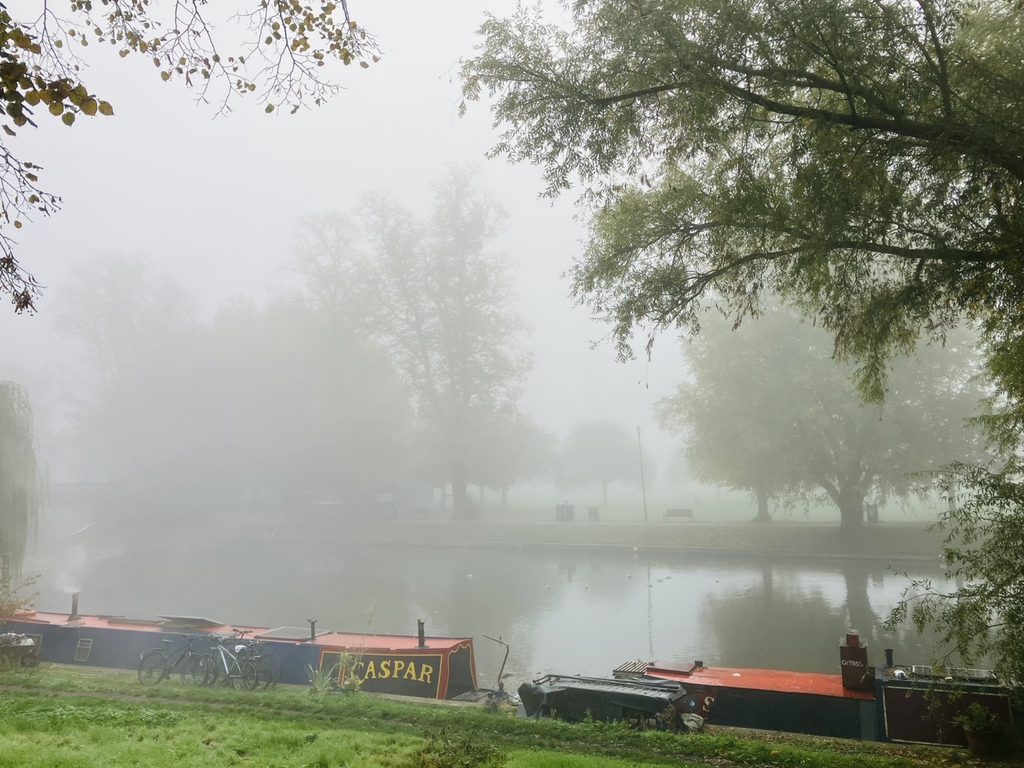
The River Cam in the morning mist.
White mist enveloped the trees along the River Cam so thickly that the water was almost invisible. The bridge over this river is also connected with the name of the city, Cambridge. As I stood for a while looking at the scene, the university town I had walked through the night before seemed like somewhere quite different.
The city is full of buildings that speak of the university’s long history. Standing in front of King’s College, all I could do was look up at the intricate details of the stonework. From a hill a little farther away, I could see the city’s rooftops and towers beyond the autumn trees.
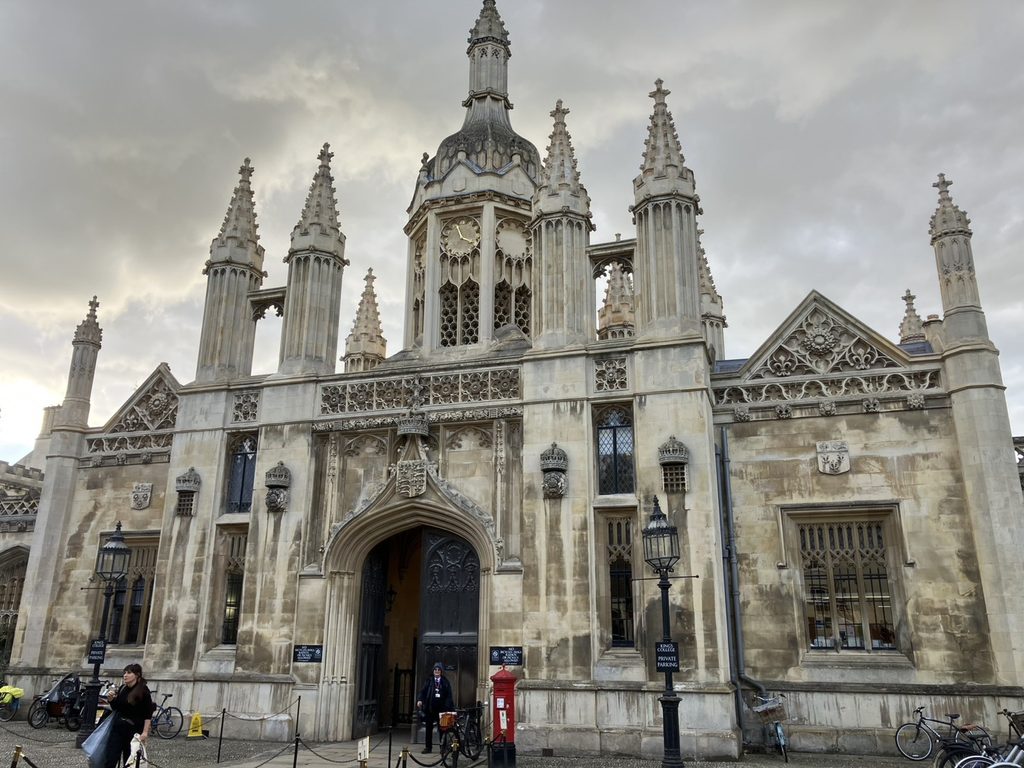
King’s College, Cambridge.
As you walk through the streets, stories from the history of research seem to be everywhere. At the pub called The Eagle, I found a plaque commemorating the place where Francis Crick and James Watson announced their discovery of the double-helical structure of DNA in 1953. It is the famous story of how they had “discovered the secret of life”.
Of course, it is now widely recognised that this discovery was not the work of those two men alone. It rested on the contributions of many researchers, including Rosalind Franklin. The fact that even a single commemorative plaque makes me want to add another chapter to the history of science probably says something about the habits of a researcher.
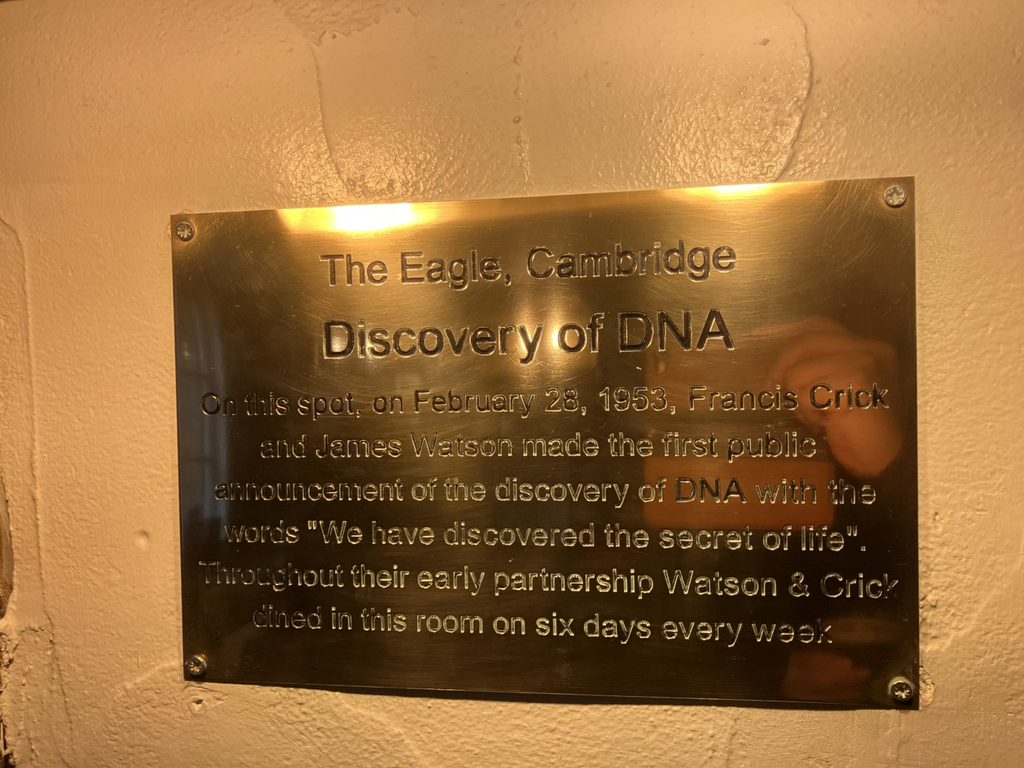
The commemorative plaque at The Eagle marking the discovery of the double-helical structure of DNA.
I also stopped by a rugby ground where a senior friend of mine had played until last year.
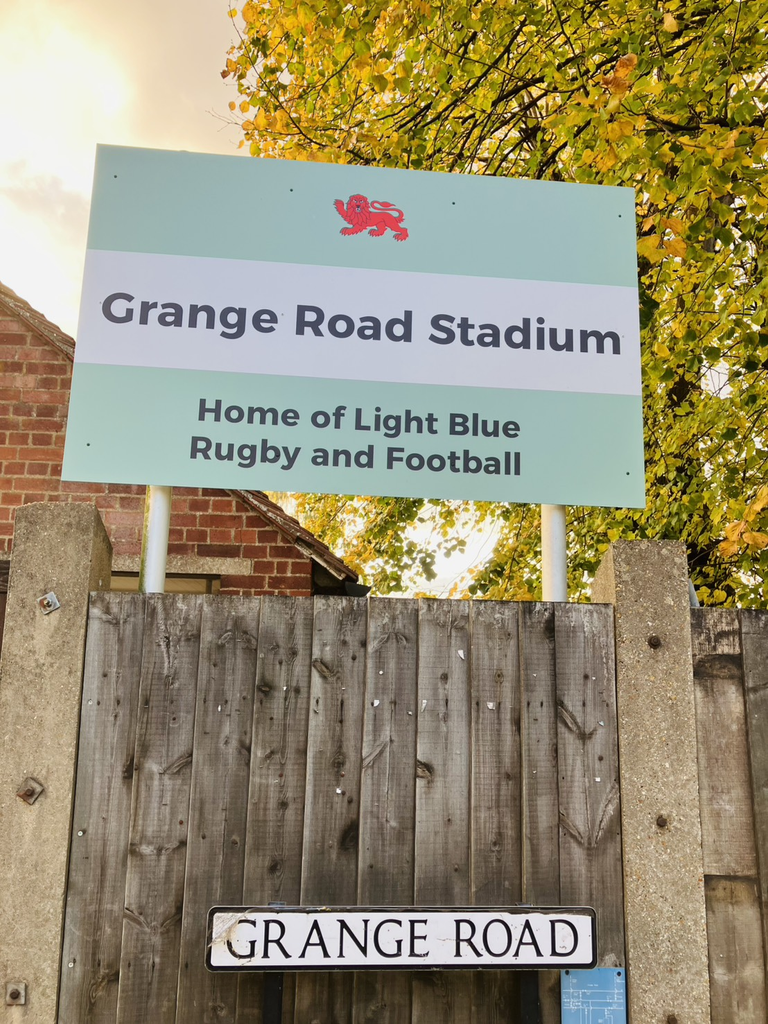
Grange Road Stadium.
The main pitch was hidden behind a wall, so I could only take a photograph by stretching my arm up. But on the practice ground, there was a familiar scrum machine. Thinking of my friend playing here, I caught the mixed smell of grass and earth, and was suddenly filled with nostalgia.
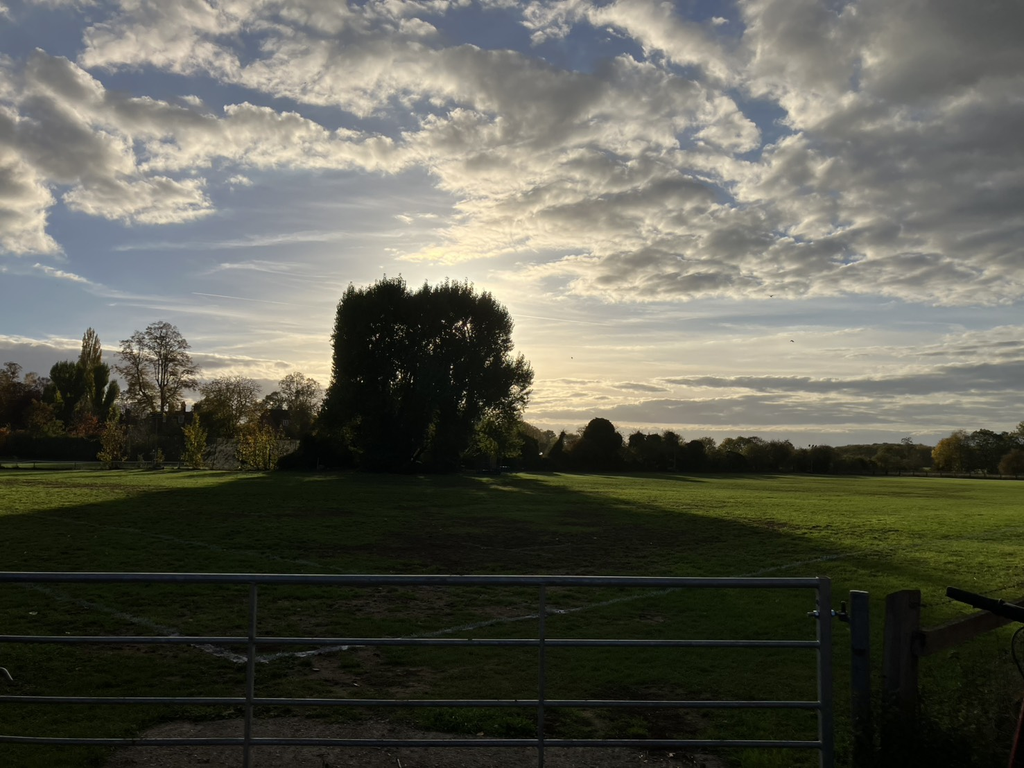
The smell of earth always takes me back to my high-school days.
At the small guesthouse where I stayed, there was a charming single bed with patterned curtains and cushions. At Fitzbillies, a local bakery, the famous Chelsea Buns were lined up, glistening with syrup.
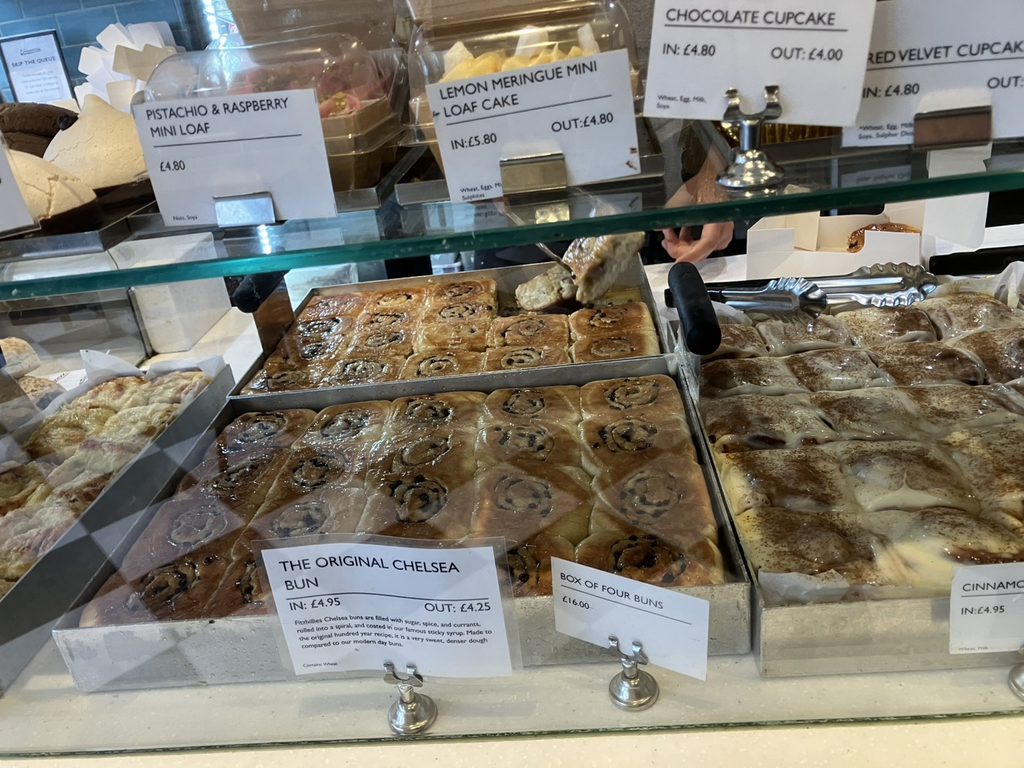
Chelsea Buns in the display case at Fitzbillies.
In a historic city, it is tempting to walk around thinking only about what great figures did there. But the people who lived here also had work to do, meals to eat, and places where they met their friends. A university town is, in the end, also a place where people live their everyday lives.
And today, at Newnham College, I spent some unforgettable hours in scholarly conversation.
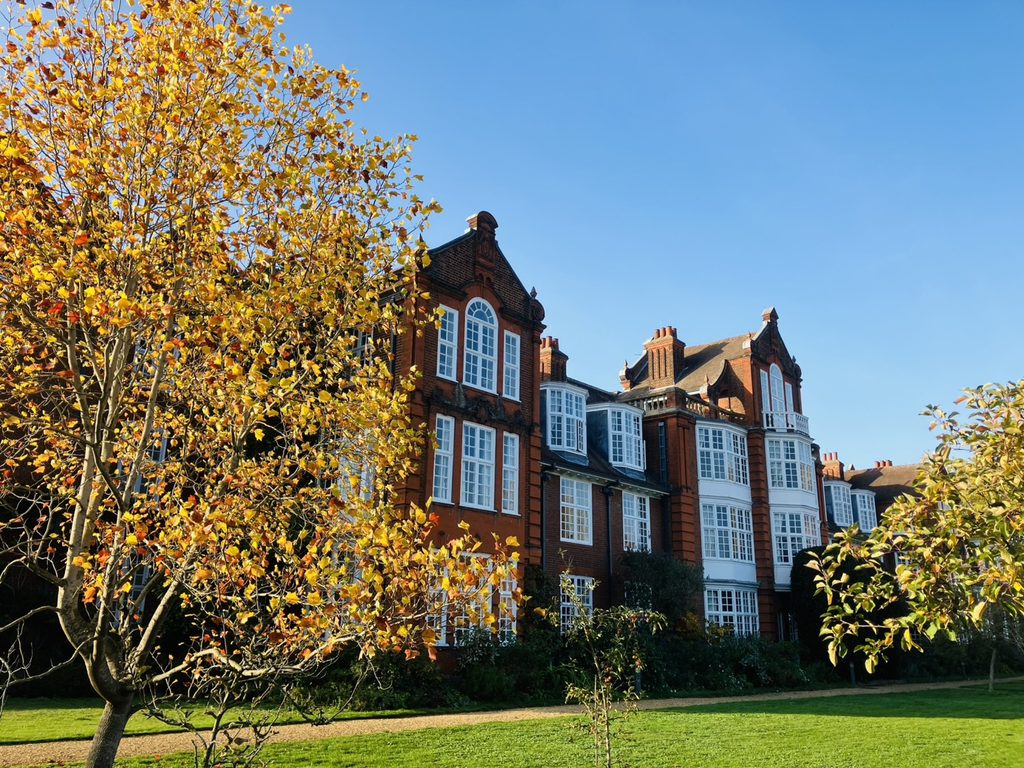
Newnham College, where our research discussions took place.
For four or five hours, I discussed Japanese tsuzurikata, or composition education, with a scholar from Cambridge and another scholar from a London university who serves as the president of an academic society.
It was an extraordinarily rich experience, almost dreamlike.
My research began with a question about how modern Japanese writing education, including the work of Einosuke Ashida, understood children’s self-expression. It is easy to say that children should “write freely”, but where do the words they use to write about their lives come from? Does a teacher not only support expression, but also help determine the form that expression takes?
When I try to think through these questions in English, questions that are difficult enough to explain in Japanese, I often discover how much I had merely assumed I understood. Even the single term tsuzurikata carries a history that cannot be adequately captured by simply translating it as “writing”.
That is precisely why I value the chance to talk without rushing towards a conclusion with people who bring different traditions of scholarship to the discussion. The more we talked, the more the questions I still needed to consider seemed to outnumber the things I knew.
We took several photographs. But I could hardly publish photographs showing other people without permission, so I have decided to include only the building here. The pleasure of research is often written so clearly on people’s faces, yet those are precisely the photographs I cannot share. Respecting privacy and permissions matters. It does, of course, though I cannot help feeling that something is lost.
Before this Cambridge visit, on 28 October, I had the opportunity to give a lecture at the University of Strathclyde in Glasgow, with the support of the Philosophy of Education Society of Great Britain (PESGB).
The title was “Transforming Others? Education, Intervention, and the Problem of Otherness”. It was a lecture questioning what it means to change another person through education.
Educators hope that children will change. But who has the right to judge whether that change counts as an improvement? This year I have been exploring the question through a Mother’s Day drawing from when I was five, on which my teacher wrote the words for me; a school composition from when I was nine in which I resolved to study harder because I had been playing too much; and the tsuzurikata pedagogy of Einosuke Ashida.
This time I took the discussion further, into research on contemporary primary-school practice. Children who had explored their local community noticed that, although they had come to know more about the town, they had not necessarily come to like it more. When the teacher and researchers redesigned lessons in response to what the children had said, were they respecting the children’s voices? Or were the adults drawing those voices back into their own educational aims?
Of course, the two possibilities cannot easily be separated. Merely saying that we will “change things together with children” does not make the power of educators disappear. Researchers, too, are among those who act upon educational practice.
I brought this question, which had also been central to my talk at Friedensdorf International, before an audience of philosophers of education. As I spoke, I began to sense a connection between my historical research and my research on contemporary educational practice, two areas I had pursued somewhat separately. The important words, though, are “began to sense”. There is still a great deal I cannot yet put into words.
Amid all this activity in October, one other piece of work also took a form that made me very happy.
Through TRIADE, we were able to publish a digital facsimile collected edition of the research journal Kokugo Kyōiku no Riron to Jissen: Ryōrin (Theory and Practice in Japanese Language Arts Education: Two Wheels).

The digital facsimile collected edition of Ryōrin. The photograph shows the cover of Volume 6.
Ryōrin was the journal of the Ryōrin Society, founded in 1986 mainly by practising teachers and graduate students who had studied Japanese language arts education with Professor Jun’itsu Hamamoto. The name expressed their wish to connect theory and practice like the two wheels of a vehicle. Members from different types of schools and institutions met for monthly study groups and residential seminars. Their work was recorded in forty-two issues, from the first in 1989 to the final issue in 2004.
The contents are fascinating. There are accounts of classroom practice in which teachers carefully observed children, developed teaching materials, and designed units of study. Other articles attempt to bring new findings from linguistics into Japanese language arts lessons. Reading them gives a sense of the questions teachers and researchers were asking, and the experiments they were undertaking, in an era marked by revisions to the national curriculum and debates about a “new view of academic ability”.
The origins of this publication project go back to a gathering after a themed research session at a national conference on Japanese language arts education in Kagoshima in May 2024.
…And as soon as I write that, I realise it is another rather long story. I will have to tell it properly some other time.
For now, what I can say is that, thanks to the time and effort so many people contributed, a journal that had become almost legendary is once again available to read. I am sure that everyone involved has their own feelings about the project. But above all, I am glad that so many people have welcomed its publication. I feel very fortunate to have played even a small part in it.
The pages of that journal preserve questions that the researchers and teachers of the time had not yet fully worked out. Some of the ideas may now seem dated. Others may contain questions that we have still not adequately taken up.
Rather than forcibly recasting those texts in the language of the present, we have made it possible to read them again as writings of their own time. I think a digital facsimile is not a way of preserving the wisdom of the past as a set of “correct answers”. It is a way of enabling readers in another era to begin thinking from it.
Since the spring, I have attended a number of research meetings in Britain. Here, I am asked what Japanese tsuzurikata education was. In Japan, the reissued Ryōrin offers a way to encounter the work of teachers and researchers of an earlier generation. Questions from people separated by time and place are meeting on my desk today.
Come to think of it, 1989, the year the journal first appeared, was also the year I was born. When its final issue came out in 2004, I was still in junior high school. I am now reading as history the things that were happening in schools when I was a child.
Time has a surprisingly peculiar way of connecting things.
Well then. Having written this far, I return to the train.
The aisle is still crowded. Someone shifts their feet; someone else lifts a bag to make room. The heat inside the carriage has not changed. The Cambridge afternoon I spent talking for hours, and the faces of the colleagues who have now dispersed to different places, are finally beginning to feel a little farther away.
On my desk, as it were, are papers for which I have not yet received a response. There are books I still have to write. The questions I brought away from Cambridge will probably not become a paper overnight.
On the other hand, there is work like Ryōrin, which has finally reached readers after a long period of effort.
October was autumn, after all. Some things have borne fruit; others may not even have begun to sprout. For now, they are all there before me. I hope this will be a fruitful autumn, though most of these things are not ones for which I can decide the harvest date myself.
…Around the time I boarded this train and began writing, my sons were enjoying Halloween dressed as skeletons. In the photograph, they are standing happily with their treat bags. On another day, travelling together on a train, they both laughed so hard that their faces scrunched up. I have no idea what they found so funny.
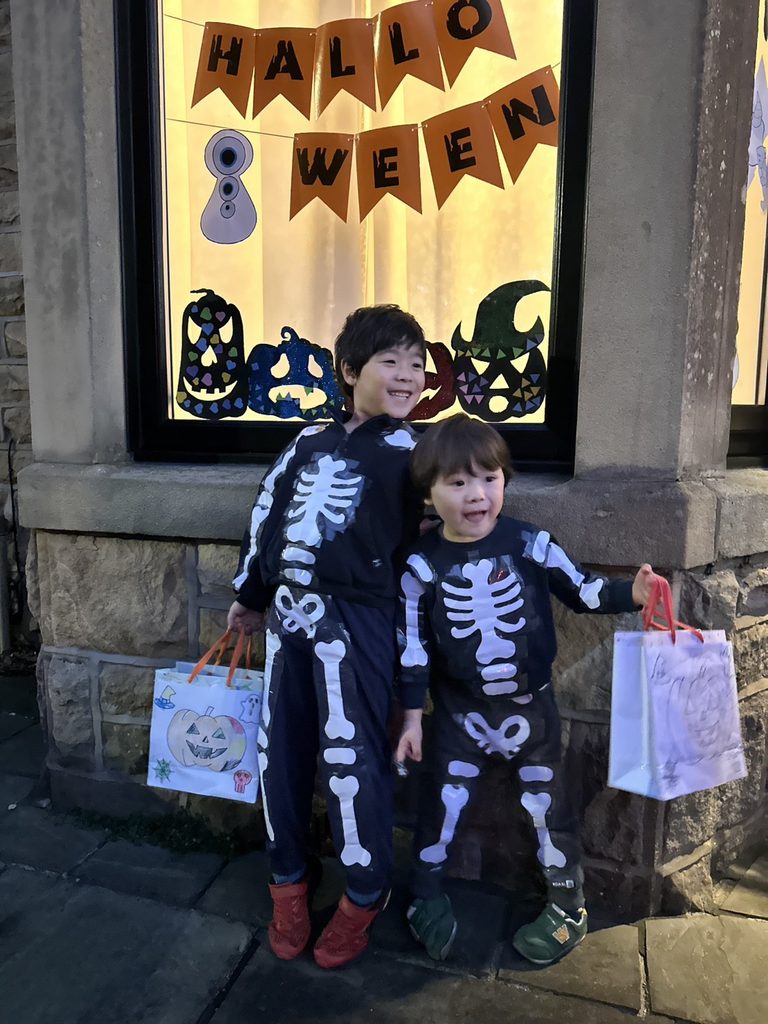
My two boys enjoying Halloween.
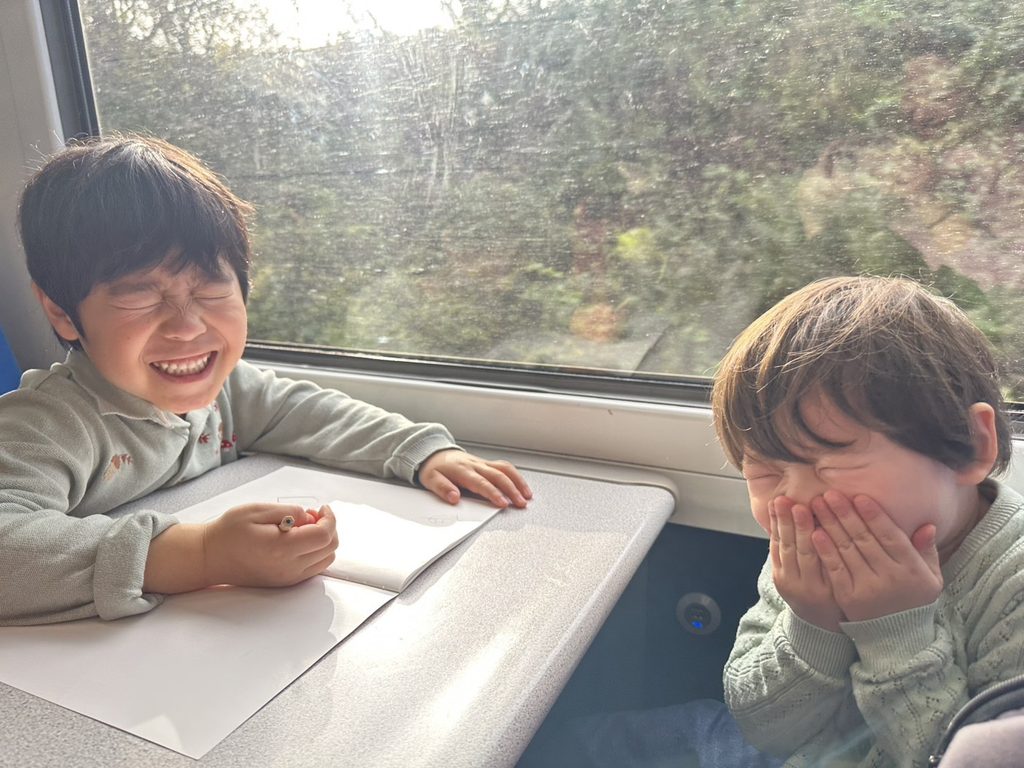
The brothers laughing helplessly on a train journey.
It has certainly been a long day for me, too.
It is dark outside the train window. Somehow, on this train that has finally begun moving, I have managed to write this much.
Will I make it home to Lancaster before the day is over? Once midnight passes, it will already be November.
(A professor I met in Germany recently emailed to tell me that a delayed train had turned an expected 5 p.m. arrival home into a 4 a.m. arrival the following day. “It was a thoroughly Kafkaesque experience!” he added.)
If nothing else, I hope I can get a little sleep tonight.