An English version is provided below. I have used AI assistance for the translation, but I have checked the text myself.
渡英から、5か月が経った。
この一か月ほど、ずいぶん遠くまで動いた。
7月にはブリストルへ行き、8月には一人で大西洋を越えてカナダのモントリオールへ。その後マンチェスターへ戻ると、毎年夏に英国へやって来る義父母たちと合流し、マンチェスター、リバプール、チェルトナムを経て、いまはコーンウォールの親戚宅にいる。
この文章を書いているサンテラスの向こうには、なだらかな丘が続いている。
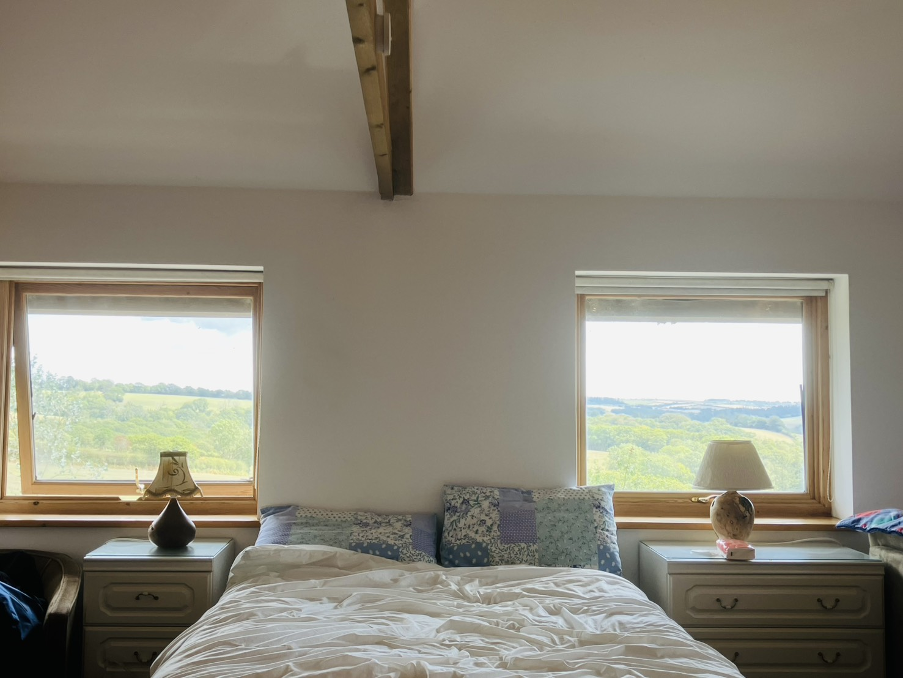
叔父が自分で建てたロッジに泊めてもらい、庭で採れたものを食べる。少し歩けば鶏や豚がいる。ここでは鶏も豚も育て、最後には自分たちで食べるという。私たちはその暮らしの、もっともおいしいところだけを体験させてもらっている。
こういう場所に来ると、決まって島根のことを思い出す。
その話は、もう少しあとでしたい。
モントリオールで考えたこと
8月11日から14日まで、モントリオールでInternational Network of Philosophers of Education、INPEの国際学会に参加した。
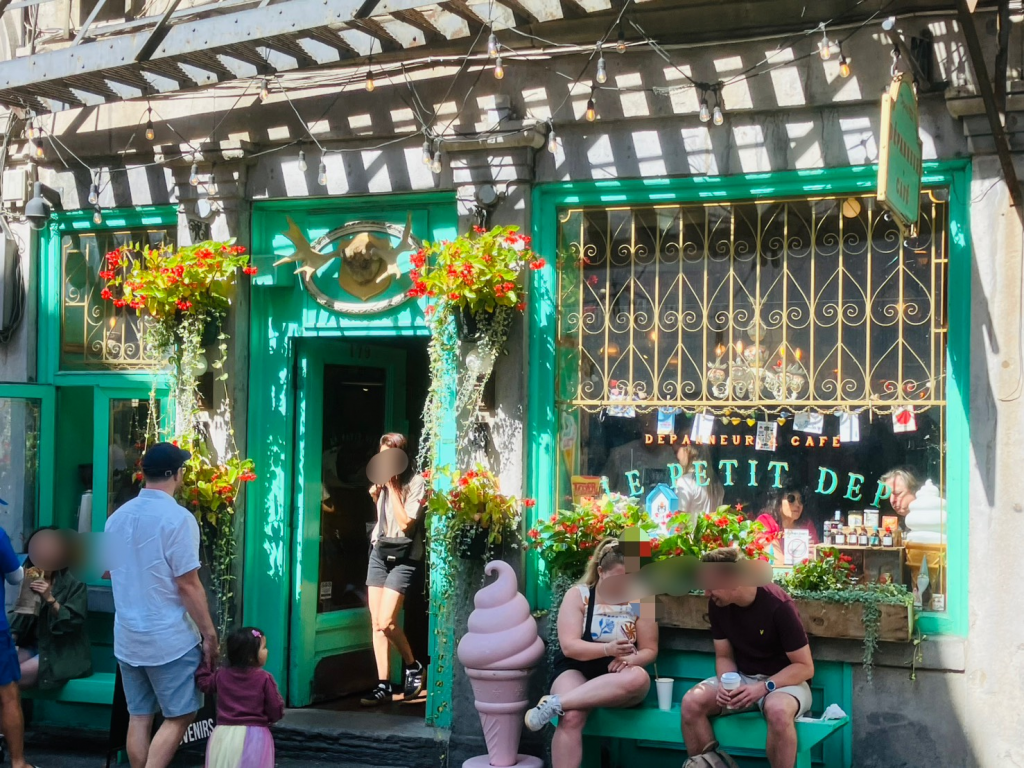
「北米のパリ」と呼ばれるだけあって、街にはフランス語があふれている。英語で話しかければ英語で返ってくるのだが、看板を眺めているだけでは、自分が北米のどこにいるのか、ときどき分からなくなる。
今回の私にとって中心となったのは、「Education as Violence」(「暴力としての教育」)という、少々物騒なタイトルのラウンドテーブルだった。
尊敬する恩師、先輩方とともに、丸山恭司先生が長く論じてこられた「教育の悲劇」と「学習者の他者性」を、ウィトゲンシュタインの哲学を手がかりに改めて考える企画である。
教育は通常、子どもを抑圧から解放するものとして語られる。
しかし、よかれと思って「教える」こと自体が、相手をこちらの言葉や価値のなかへ組み込む営みでもあるとしたらどうだろう。
丸山先生は、この厄介な問題を「教育の暴力性」として考えてきた。今回のラウンドテーブルでは、教師が予測も統制もできない学習者の反応を、教育の失敗として消去するのではなく、むしろ教師と学習者との関係を開き直す契機として捉えられないか、という問いが共有されていた。
私はそこへ、長年研究してきた芦田恵之助の作文教育を持ち込んだ。
芦田の「随意選題」は、子どもが自分で題を選び、自分の生活を書く実践として知られている。私自身、そこに子どもの自由を見いだして研究を始めた一人である。
しかし今回、改めて問い直してみた。
自由に書くとは、本当に、すでに「自分の内側」にある「声」をそのまま外へ出すことなのだろうか。
発表では、5歳のころの自分の絵を一枚示した。
母の日に描いた母の絵で、その横には、
「あそんでくれる ごはんをつくってくれる おかあさんがだいすき」
と書いてある。
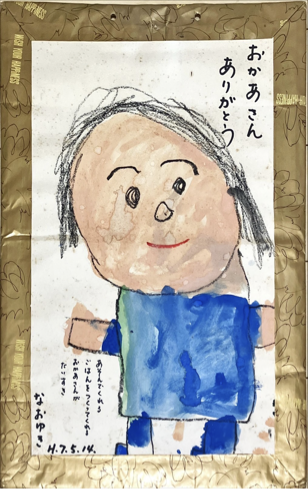
ところが、この文章を書いたのは私ではない。保育所の先生である。
では、これは誰の言葉なのだろう。
先生の言葉なのか。私の言葉なのか。それとも、先生と5歳の私との「あいだ」で生まれた言葉なのか。
数年後、小学生になった私は、自分の手で作文を書いている。
「そういえばこのごろあそんでばかりだったな。これからべんきょうしよう。」
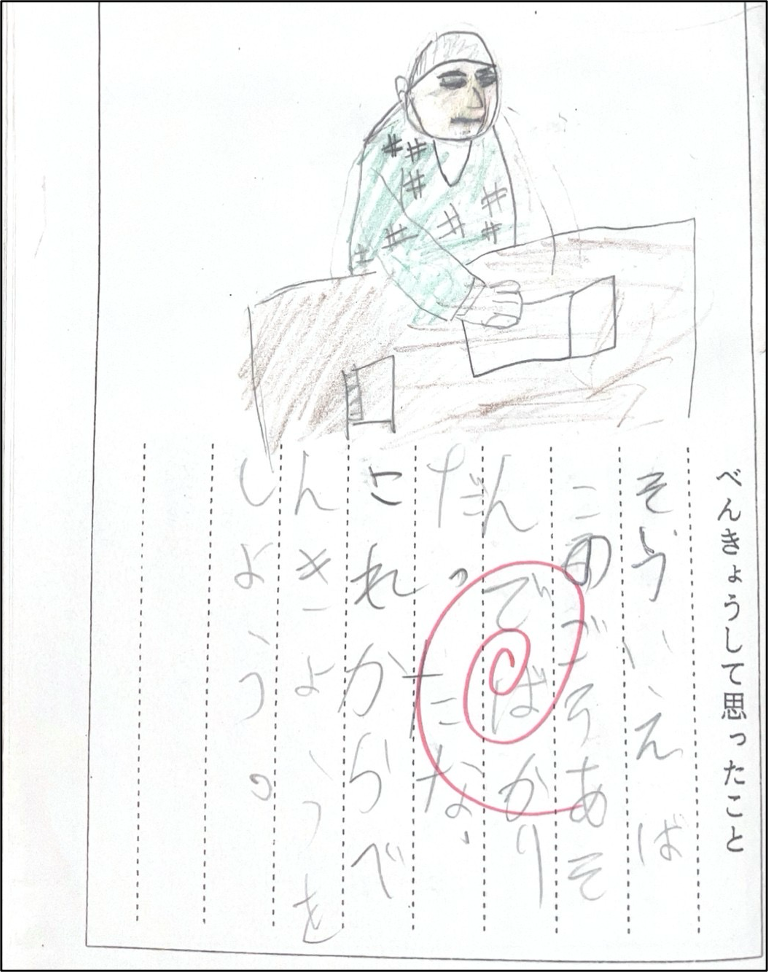
大正っぽい服装はさておき、今度こそ筆跡も言葉も私のものだ。
しかし、9歳の子どもが「自分は遊びすぎた。これから毎日勉強しよう」と反省するとき、その言葉はいったいどこから来たのだろう。
私はすでに、「学校の言葉」で自分を語ることを覚えていたのかもしれない。
書くことは、完成した「自分」を紙の上へ取り出すことではない。
私たちは誰かから言葉をもらい、その言葉を使い、ときには拒み、ときには作り替えながら、自分の声そのものをつくっていく。
だから教育の問題は、子どもを「統制するか、自由にするか」という二択ではない。
教師は子どもの声の形成に必ず関わる。しかし、関わったからといって、その声の意味まで教師のものになるわけではない。
教育は、自らもその形成に関わった声に対して、なお応答し続けることができるのか。
そんなことを考えた。
そして、この問いをさらに厄介にするために、芦田が植民地下の朝鮮や南洋群島の日本語読本編纂にも関わっていたことを取り上げた。
子ども自身の生活を書くことを大切にした人物が、一方では日本語による帝国の教育にも関与している。
これは単純に、「芦田にも矛盾があった」という話ではない。
むしろ、人の表現を可能にする言葉が、同時にその人をある世界へ組み入れる言葉にもなりうるという、教育そのものの難しさなのだと思う。
この問題は、まだほとんど解けていない。
ただ、学会というのはありがたいもので、自分一人では解けない問いを持っていくと、さらに解けなくして返してくれる。
今回も見事にそうなった。
発表後の議論では、言語規範によって主体が形成されることと、それでもなお、そこに現れる他者の声にどう応答するのかという問題が返ってきた。
自分が考えてきたことの輪郭が少しはっきりすると同時に、その外側にまだ考えていない問題がいくつもあることが見えてきた。
研究としては、かなり幸せな状態である。
モントリオールで、シェフィールドにつながる
そして今回、研究内容そのものと同じくらい大きかったのが、人との出会いだった。
なかでも不思議だったのは、シェフィールド大学に所属し、胡適を研究している研究者との出会いである。
現在はコロンビア大学に留学中だが、9月には英国へ戻るという。
「シェフィールド」と聞いて、私はすぐに一つの資料のことを思い出した。
実は7月から、シェフィールド大学に残されているかもしれない、一枚の古い写真を探している。
探しているのは、国際的な新教育運動を牽引したBeatrice Ensorに関係する写真である。
きっかけは、『世界新教育運動辞典』の編纂にも携わられた岩間浩先生から伺った話だった。
岩間先生は15年か20年ほど前、シェフィールド大学を訪ねた。そのとき、大学の方がどこかの部屋から非常に大きな集合写真を持ってきてくれたという。
そこには、大勢の生徒に囲まれて座る若い女性教師が写っていた。
それが、若き日のEnsorだったらしい。
あまりに大きな写真だったため、その場では複写できなかった。
岩間先生にとって、それが長く心残りになっていた。
そこで英国にいるうちに探してみようと思い、7月、シェフィールド大学のSpecial Collections, Heritage, and Archivesへ問い合わせた。
ところが、「Beatrice Ensor」で調べても写真は見つからなかった。
大学のアーキビストはUniversity ArchivesとSpecial Collections Archivesの双方を確認してくださり、Sheffield Educational Settlement PapersのなかにEnsorの書簡が一本あることまでは突き止めてくださった。しかし、肝心の写真はない。
手詰まりかと思ったところで、岩間先生から連絡が来た。
大切なことを思い出したという。
当時、彼女はまだEnsorではなかった。
結婚前なので、Beatrice Normanだったのである。
しかも、新教育連盟が発足する1921年よりもかなり前、1910年代のことだった。Normanはシェフィールドで家政学を教えていたらしい。岩間先生の記憶にある写真も、その時代のものではないかという。
名前が一つ変わるだけで、資料の世界はまったく違って見える。
歴史研究では、こういうことがある。
「ない」と思っていた資料が、別の名前で眠っている。
しかも岩間先生は、ご自宅の整理で大変な最中に、偶然シェフィールド関係の古い資料まで見つけ、わざわざ英国の私のところへ送ってくださった。
人から人へ渡されてきた記憶を頼りに、百年以上前の一人の教師の姿を追いかける。
私はこういう仕事がけっこう好きなのだと思う。
そしてモントリオールで、たまたまシェフィールド大学の研究者と出会った。
話してみると、彼自身は胡適を研究している。
専門は違う。
しかし、シェフィールドという土地で資料を探すこと、そして東アジアと英国とのあいだを移動した思想や教育を考えることには、どこか接点がある。
9月に彼が英国へ戻ったら、一緒にシェフィールドで資料を探してみよう、という話になった。
写真が見つかるかどうかは分からない。
むしろ、見つからない可能性の方が高いのかもしれない。
それでも、一人でメールを書いていた7月にはなかった道が、モントリオールで人に会ったことで一本増えた。
研究というのは、こういうふうにも進む。
モントリオールまで行って、英国での仕事が増えた
もう一つ、思いがけない話も生まれた。
ラウンドテーブルの司会を務めてくださったUniversity of Strathclydeの先生と、終了後に話しているうちに、グラスゴーでも研究発表をしないか、という話になった(実際は私の方からけっこう鼻息荒くお伺いする機会が作れないか尋ねた)。
帰英後にメールを送ると、秋に大学へ招いていただく方向で検討してくださることになった。
英国のPhilosophy of Education Society of Great Britainの支援を受けることを想定しているので、単なる歴史研究の報告ではなく、哲学的な内容がよいという。10月か11月を念頭に、日程と内容をこれから相談することになっている。
モントリオールまで行って、英国での仕事が二つ増えた。
少し不思議である。
研究というものは、机に向かっていると、一人で進める仕事のように見える。
けれど実際には、人に会い、話し、知らなかった資料を教えてもらい、「それなら一緒に探しましょう」「こちらでも話しませんか」と言われることで、突然その先に道ができる。
何より今回、尊敬する恩師や先輩方と一つの問いを囲み、同じテーブルで議論できたことは、本当に幸運だった。
このところ、研究がとても楽しい。
業績のためではなく
ここで少し書きにくいことも書いておきたい。
現在の私には、驚くほど「出世したい」という気持ちがない。
こんなことを書くと不遜に聞こえるかもしれない。
しかし少なくとも今は、昇進や雇用維持のためにあと何本論文を書かなければならない、といった事情からはかなり自由に研究させてもらっている。
これは、所属大学に心から感謝していることの一つである。
では、論文を書かなくてもよいのかというと、もちろん逆である。
研究する時間をいただき、研究費をいただき、こうして一年間海外にまで出していただいている。
そこから得たものは、口頭発表であれ、論文であれ、本であれ、何らかのかたちで社会へ返さなければならないと思っている。
だから書く。
産みの苦しみは相変わらず苦しい。
それでも、その苦しみを含めて面白い。
ただ、それは「業績の数を増やしたい」からではない。
こういうことをわざわざ書くのは、ときどき、業績をつくるために他人を利用しているのではないか、といった見方をされることがあるからである。
TRIADEについても、活動が広がるにつれて批判をいただくことが増えてきた。
以前の私は、自分が誰かから嫉妬される可能性など、ほとんど考えたことがなかった。
ここ5年ほどで、世の中は必ずしもそう単純ではないらしい、と知った。
ある友人は、それを「挑戦者の名誉」と呼んだ。
最近、この言葉をよく思い出す。
芦田恵之助も、自伝のなかで、自らの『読み方教授』に寄せられた批判だけを集めれば、一冊の大著になる、と回想している。
もちろん、芦田ほどの仕事をしたわけではない。
ただ、何かを外へ出せば、それについて何かを言う人が現れる。
誰にも何も言われないもっとも確実な方法は、おそらく何もしないことである。
そう考えると、批判が届くこともまた、自分の仕事が自分の机の上だけに留まらなくなった徴なのかもしれない。
7月と8月は、そんなことも含めて、本当に研究が楽しかった。
サバティカルの恩恵も、ここに極まれり、という感じがする。
そして、スーツケースは黒い包みになった
もっとも、研究が充実しているからといって、生活まできれいに整うわけではない。
モントリオールからマンチェスターへ戻ると、そのまま家族旅行が始まった。
義父母たちと合流し、マンチェスターから親戚宅へ移動する予定だったのだが、ここで荷物が届かなくなった。
配送会社EvriのNext Dayサービスで送った青いスーツケースが、翌日になっても来ない。
その翌日も来ない。
荷物を待つため、結局マンチェスターでもう一泊することになった。
それでもホテルを出る時間までには届かず、私たちが出発した後になって「配達完了」の通知が来た。
添付された写真を見る。
そこに、青いスーツケースはない。
代わりに巨大な黒い包みが写っている。
「これは……何だろう。」
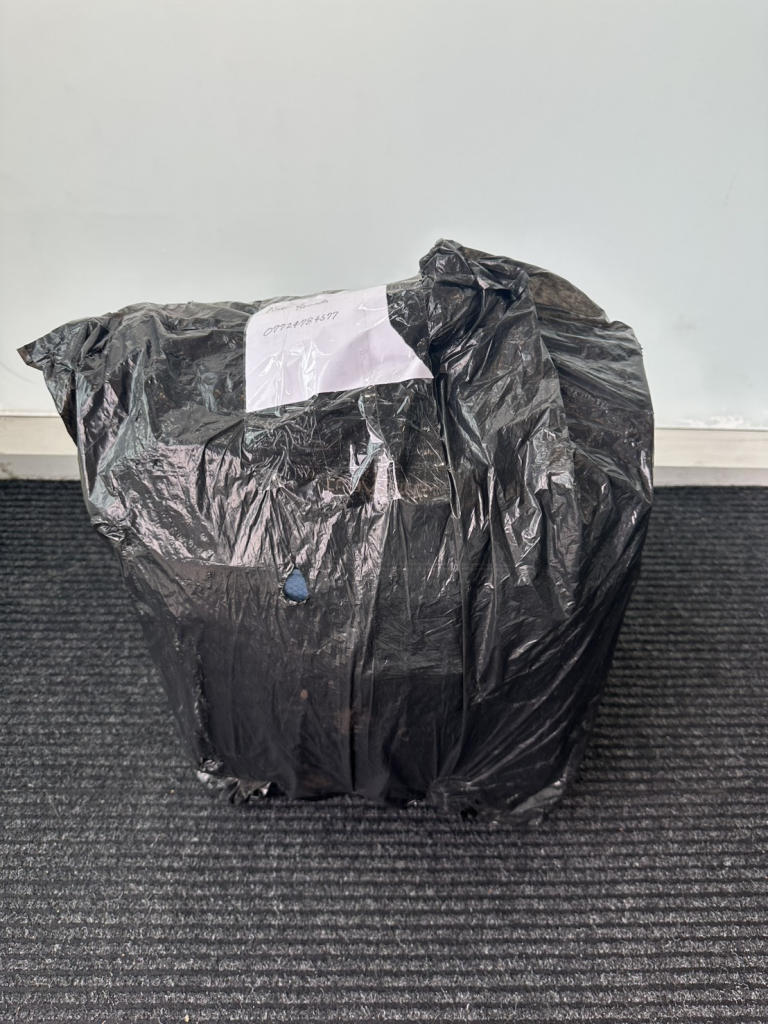
後日、マンチェスターまで戻って回収した。
黒いビニールを何重にも剥がしていく。
包みの中から出てきたのは、たしかに私たちの青いスーツケースだった。
少し安心した。
しかし、白いペンキのようなものが盛大についていた。
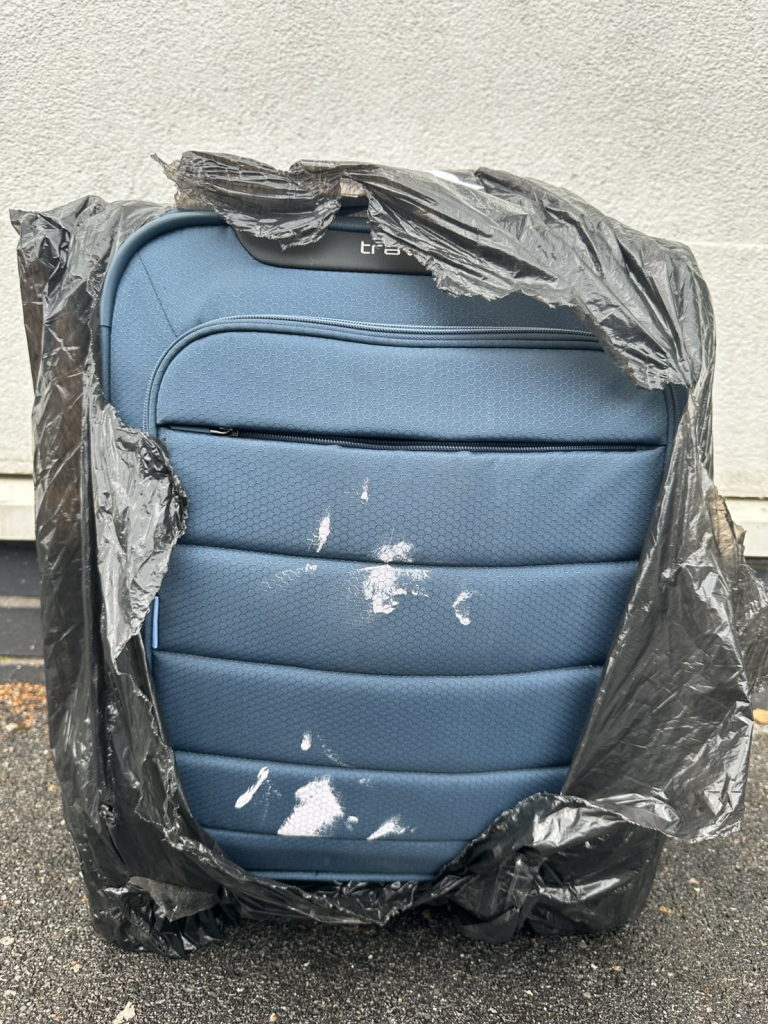
翌日配達のはずが数日かかり、もう一泊して待ち、それでも間に合わず、後日取りに戻り、ようやく出会えたスーツケースは少し模様替えまでしていた。
英国生活は、ときどきこちらの想像力を軽々と超えてくる。
熱を出す子どもと、大人の予定
ようやく荷物を回収し、リバプール、チェルトナムを経てコーンウォールへ向かおうとしていたころ、今度は長男が熱を出した。
39度を超えた。
旅行中の子どもの発熱ほど、予定表というものの頼りなさを教えてくれるものはない。
どこへ行くか。
ホテルを延長するか。
病院へ行くか。
明日は移動できるか。
数時間ごとに体温を測り、水分を飲ませ、食べられるものを探しながら、その都度予定を考え直した。
幸い、その後は熱も下がり、食欲も戻ってきた。
そして私たちは、予定より少し慎重に、コーンウォールまでやって来た。
野に出ていく
叔父の家の周囲には、子どもにとって魅力的なものがいくらでもある。
ブラックベリーを見つければ、
「これ、食べていい?」
と聞く。
長い草を見つければ、それを互いに引っ張って遊び始める。
シャワールームに3匹いた蜘蛛に追い立てられ、野では虫を追い、泥を踏む。
大人が「自然体験プログラム」を用意しなくても、子どもは勝手に遊びを始める。
その姿を見ていると、島根で育った自分の子ども時代を思い出す。
山に入り、川で遊び、虫を捕まえた。
誰かから「これは教育的に価値があります」と説明された記憶はない。
ただ、そこに山や川があった。
昨年、墓じまいをして、島根の実家を畳んだ。
それから、寝る前にあの家や土地のことを思い出すことが増えた。
広い土地を持つことは、外から眺めるほど牧歌的なことではない。
草は伸びる。
木は育つ。竹の侵略スピードは凄まじい。
建物は傷む。
道も畑も、人が手を入れなければすぐに自然へ戻っていく。
コーンウォールのこの広い土地を見ても、それを守って暮らしている人たちの勤勉さには頭が下がる。
自然とは、ただ人間を癒やしてくれる優しい存在ではないのだと思う。
人が働きかけ、自然もまた人へ働きかける。
その往復のなかに暮らしがある。
それでも、ここへ来てから、身体のどこかに溜まっていた黒くてどろどろしたものが、少しずつ溶け出していくような感じがする。
サンテラスから庭を眺める。
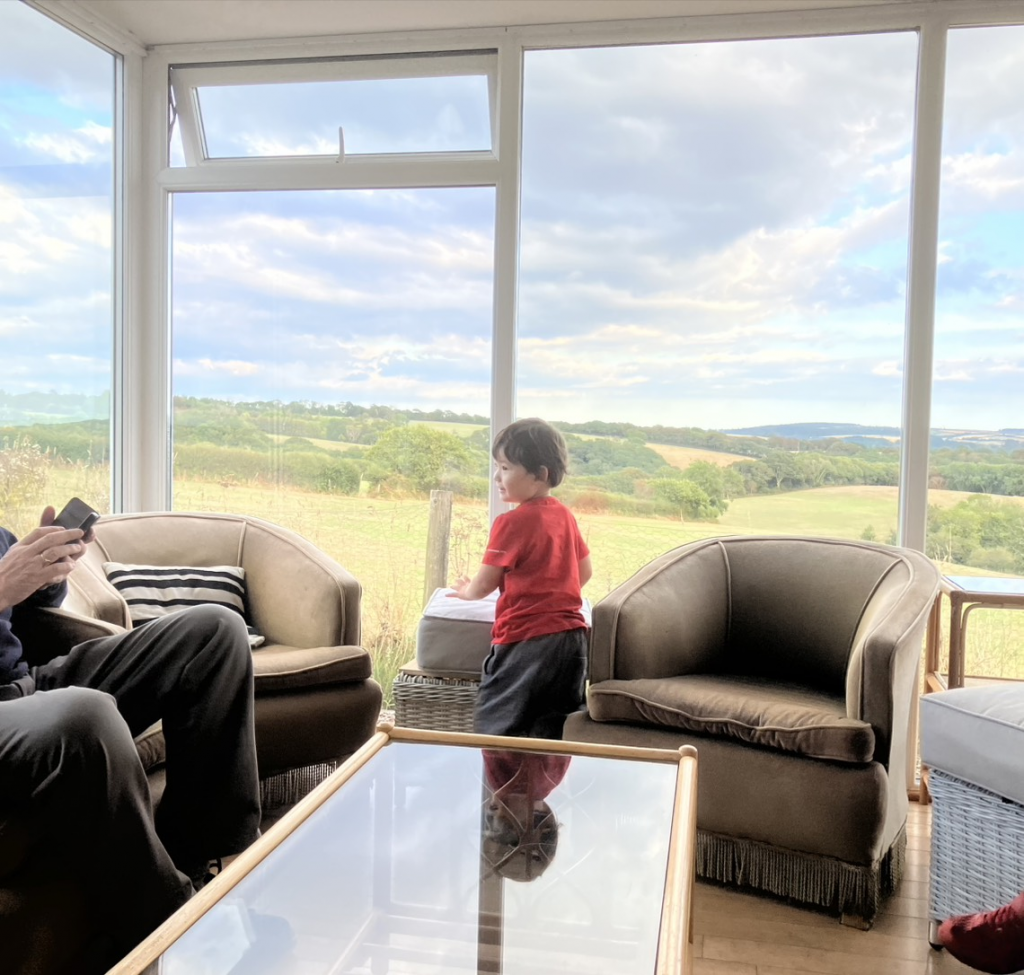
気がつくと子どもたちは、もう外にいる。
何をしているのかは、よく分からない。
何かを見つけたらしい。
見つかるかどうか分からないもの
モントリオールで私は、
「これは誰の声なのか」
という問いについて話した。
子どもの声は、子どもの内側に完成品としてしまわれていて、それを教師が傷つけないよう慎重に取り出せばよい、というものではない。
声は、人との関係のなかで生まれる。
言葉を与えられ、応答され、ときには思いもよらない方向へ進んでいく。
考えてみれば、研究も似ている。
シェフィールドに一枚の写真があった。
15年か20年前、岩間先生はたしかにそれを見た。
けれど今、それがどこにあるのかは誰にも分からない。
「Beatrice Ensor」で探しても見つからず、「Beatrice Norman」という名前が現れた。
大学のアーキビストが別の資料を見つけてくれた。
岩間先生の家から古い資料が出てきた。
そして、まったく別の目的で出かけたモントリオールで、シェフィールド大学の研究者と出会った。
9月には二人で、その続きを探す。
写真は見つからないかもしれない。
※※※
研究は、最初から答えの場所が分かっているものを取りに行く仕事ではない。
人に尋ね、間違え、別の名前を知り、思いがけない人と出会いながら、少しずつ問いの方が変わっていく。
生活も、たぶん同じなのだろう。
予定どおり届くはずだったスーツケースは黒い包みになって現れ、元気だった子どもは旅先で39度の熱を出す。
そして、その子どもが数日後には、リバプールの野原でブラックベリーを摘んでいる。
自分の思いどおりにならないものと一緒に生きること。
教育について考えてきた問いが、この5か月の暮らしのなかで、少しずつ別の意味を持ちはじめている。
窓の外では、今日も風が草を揺らしている。
子どもたちは、また何かを見つけたらしい。
シェフィールドの写真も、いつか見つかるだろうか。
Notes from My Stay in the UK, No. 8:
Going Far Away, Seeing What Is Near
It has now been five months since I came to the UK.
Over the past month or so, I have travelled quite a long way.
In July, I went to Bristol. In August, I crossed the Atlantic alone to Montreal, Canada. After returning to Manchester, I joined my parents-in-law, who come to England every summer, and we travelled through Manchester, Liverpool, and Cheltenham. I am now staying with relatives in Cornwall.
Beyond the sunroom where I am writing this, gentle hills stretch into the distance.
We are staying in a lodge my uncle built himself. We eat food grown in the garden. Chickens and pigs are kept nearby. Here, the chickens and pigs are raised and, in the end, slaughtered and eaten by the family themselves. We are, of course, enjoying only the most pleasant parts of that way of life.
Whenever I come to a place like this, I inevitably think of Shimane.
I will return to that a little later.
What I Thought About in Montreal
From 11 to 14 August, I attended the International Network of Philosophers of Education conference in Montreal.
Montreal is often called the “Paris of North America,” and French is everywhere. If you speak to people in English, they will usually reply in English, but looking only at the signs, I sometimes found myself wondering exactly where in North America I was.
For me, the central event of the conference was a roundtable with the slightly alarming title, “Education as Violence.”
Together with teachers and senior colleagues whom I deeply respect, I reconsidered Professor Yasushi Maruyama’s long-standing ideas of the “tragedy of education” and the “otherness of learners,” with Wittgenstein’s philosophy as a point of departure.
Education is usually spoken of as something that liberates children from oppression.
But what if the very act of teaching with good intentions also means incorporating another person into our language and our values?
Professor Maruyama has long examined this difficult problem as the violence inherent in education. In our roundtable, one of the shared questions was whether the learner’s responses, which a teacher can neither fully predict nor control, might be understood not simply as failures of education but as opportunities to reopen the relationship between teacher and learner.
I brought into this discussion the writing pedagogy of Einosuke Ashida, whom I have studied for many years.
Ashida’s method of zuii sendai, or free-topic writing, is well known as a practice in which children choose their own topics and write from their own lives. I myself began studying Ashida because I saw in this practice a form of children’s freedom.
This time, however, I asked the question again.
Does writing freely really mean simply bringing out a “voice” that already exists inside oneself?
In my presentation, I showed a drawing I had made when I was five.
It was a picture of my mother for Mother’s Day, with the words:
“She plays with me. She cooks for me. I love my mom.”
But I had not written those words. My kindergarten teacher had.
So whose words were they?
My teacher’s? Mine? Or something that emerged in the space between my teacher and my five-year-old self?
A few years later, as an elementary school pupil, I wrote for myself:
“I’ve been playing too much lately and haven’t been studying, so from now on I’ll study every day.”
This time the handwriting was mine, and the words were mine.
But why did a nine-year-old child decide that he had been “playing too much” and ought to study every day?
Perhaps I had already learned to speak about myself in the language of school.
Writing is not a matter of taking a completed “self” and placing it onto paper.
We receive words from others, use them, sometimes reject them, sometimes transform them, and in doing so form our own voices.
So the educational question is not simply whether teachers should control children or set them free.
Teachers inevitably participate in the formation of a child’s voice. But that does not make the meaning of that voice the teacher’s property.
Can education remain answerable to a voice whose formation it has helped shape?
That was the question I wanted to pursue.
To make the problem still more difficult, I also examined Ashida’s involvement in compiling Japanese-language readers for colonial Korea and the South Seas Mandate.
A man who valued children writing about their own lives was also involved in imperial education conducted through the Japanese language.
This is not simply a matter of saying that “Ashida was contradictory.”
It points instead to a difficulty within education itself: the language that makes expression possible may also be the language through which people are incorporated into a particular world.
I have not solved this problem at all.
But one of the great things about conferences is that when you bring along a question you cannot solve by yourself, other people often return it to you in an even less solvable form.
That happened this time as well.
In the discussion after my presentation, I was asked to think further about the relationship between subject formation through linguistic norms and our responsibility to remain answerable to the other’s voice that still emerges within those norms.
The outline of what I had been thinking became somewhat clearer. At the same time, I became more aware of how many questions still lie beyond it.
For a researcher, that is a rather happy state to be in.
Montreal Led Back to Sheffield
Just as important as the intellectual discussion were the new encounters that came out of the conference.
One of the most unexpected was with a researcher affiliated with the University of Sheffield who studies Hu Shih.
He is currently spending time at Columbia University, but is due to return to the UK in September.
The moment I heard the word “Sheffield,” I thought of an old photograph.
Since July, I have been trying to trace a historical photograph that may once have been held at the University of Sheffield.
It concerns Beatrice Ensor, one of the leading figures of the international New Education movement.
The search began with something Professor Hiroshi Iwama once told me.
Some fifteen or twenty years ago, Professor Iwama visited the University of Sheffield. While he was there, a member of staff brought out an extremely large group photograph from somewhere in the university.
In the photograph, a young female teacher sat surrounded by a large number of students.
It was apparently a young Beatrice Ensor.
The photograph was too large to reproduce at the time, and Professor Iwama had regretted ever since that he had not been able to make a copy.
Since I happened to be living in the UK, I decided to see if I could trace it. In July, I contacted Special Collections, Heritage, and Archives at the University of Sheffield.
But nothing could be found under the name “Beatrice Ensor.”
The archivist kindly checked both the University Archives and the Special Collections Archives. She did find a letter from Ensor among the Sheffield Educational Settlement Papers, but not the photograph itself.
Just when I thought the search had reached a dead end, Professor Iwama contacted me.
He had remembered something important.
At the time, she was not yet Beatrice Ensor.
She had not married, so her name was Beatrice Norman.
And this was well before the founding of the New Education Fellowship in 1921. Norman had apparently taught home economics in Sheffield in the 1910s, and Professor Iwama thought the photograph might have dated from that period.
A single change of name can make an archive look entirely different.
Historical research is sometimes like that.
A source that seems not to exist may simply be sleeping under another name.
Professor Iwama was also in the middle of reorganising his home, yet during that process he happened to find some old Sheffield-related materials and kindly sent them all the way to me in England.
Following the memory of a person who saw a photograph many years ago, trying to recover the image of a teacher from more than a century ago.
I think this is the kind of work I find irresistible.
And then, quite by chance, I met a Sheffield-based researcher in Montreal.
His own research is on Hu Shih.
Our specialisms are different.
But there is some connection in the fact that both of us are interested in ideas and education moving between East Asia and Britain, and in searching for sources in Sheffield.
When he returns to the UK in September, we plan to go to Sheffield and look through the materials together.
The photograph may not be there.
Perhaps it is more likely that we will not find it.
Still, there is now one more path than there was in July, when I was searching alone by email.
Meeting someone in Montreal created that path.
Research sometimes moves forward in just this way.
I Went to Montreal and Came Back with More Work in Britain
Another unexpected opportunity emerged from the conference.
After the roundtable, I spoke with Dr Karsten Kenklies of the University of Strathclyde in Glasgow, who had chaired our session. During our conversation, the possibility came up that I might give a talk at Strathclyde.
After I returned to the UK, I emailed him, and the idea began to take more concrete shape.
The plan is to explore inviting me in the autumn, possibly with support from the Philosophy of Education Society of Great Britain. Because of that context, we are discussing a presentation that would be more explicitly philosophical rather than simply a report on Japanese educational history. October or November is currently being considered.
I travelled all the way to Montreal and somehow came back with two more things to do in Britain.
It is a little strange.
When you sit at a desk, research can look like solitary work.
In reality, however, it often moves forward because you meet someone, talk, are introduced to a source you did not know, or hear someone say, “Why don’t we look together?” or “Why don’t you come and speak here?”
More than anything, I felt extremely fortunate to have been able to sit around one table with teachers and senior colleagues I respect and discuss a shared question.
Recently, research has simply been very enjoyable.
Not for the Sake of “Achievement”
There is something slightly awkward I would also like to put into words.
At the moment, I am surprisingly free of any strong desire for promotion or upward mobility.
Writing this may sound presumptuous.
But at least for now, I am in an environment where I do not have to think in terms of how many more papers I need to publish in order to be promoted.
That is one of the things for which I am genuinely grateful to my university.
Does that mean I do not need to write papers?
Of course not.
If anything, the opposite is true.
I have been given time for research, research funding, and the opportunity to spend a full year abroad.
What I receive through that environment should, I believe, be returned to society in some form, whether through presentations, articles, or books.
That is why I write.
The pain of producing something remains painful.
But even that pain is enjoyable in its own way.
What does not motivate me, however, is simply increasing the number of items on my publication list.
I write this because, from time to time, people assume that I am using others to produce achievements for myself.
As TRIADE has expanded, I have also received more criticism.
In the past, I had barely imagined that anyone might envy me.
Over the past five years or so, I have learned that the world is not quite so simple.
A friend once called this “the honour of the challenger.”
I have been thinking of that phrase often lately.
Ashida himself later recalled that if he had gathered together all the criticism directed at his teaching of reading, it would have filled an entire substantial volume.
Of course, I have accomplished nothing on Ashida’s scale.
But when you put something into the world, someone will eventually have something to say about it.
The surest way to avoid criticism is probably to do nothing.
Seen that way, criticism may also be a sign that one’s work has finally begun to move beyond one’s own desk.
Including all of this, July and August were months in which research felt genuinely enjoyable.
It has felt like the full benefit of sabbatical life.
And Then the Suitcase Came Back Wrapped in Black
Research may be going well, but that does not mean life itself becomes beautifully organised.
As soon as I returned from Montreal to Manchester, our family summer trip began.
We had planned to meet my parents-in-law and then leave Manchester to stay with relatives.
At that point, however, one of our bags disappeared.
A blue suitcase that I had sent using Evri’s Next Day service did not arrive the next day.
Nor the day after that.
Because we were waiting for the luggage, we ended up staying an extra night in Manchester.
Even then, it had still not arrived by the time we had to leave the hotel.
Later, after we had already departed, I received a notification saying that the parcel had been delivered.
I looked at the delivery photograph.
There was no blue suitcase.
Instead, there was an enormous black-wrapped object.
“What on earth is that?”
A few days later, I travelled back to Manchester to collect it.
I peeled away layer after layer of black plastic.
Inside was indeed our blue suitcase.
That was a relief.
Then I noticed that it was generously decorated with what looked like white paint.
A Next Day delivery had taken several days. We had stayed an extra night to wait for it, left before it arrived, returned later to collect it, and finally recovered a suitcase that had undergone a slight redesign along the way.
Life in Britain occasionally exceeds the limits of my imagination with remarkable ease.
A Child’s Fever and the Fragility of Adult Plans
After finally recovering the luggage, we travelled through Liverpool and Cheltenham and were preparing to continue towards Cornwall.
Then our eldest son developed a fever.
It rose above 39 degrees.
Few things reveal the fragility of an itinerary more effectively than a child becoming ill while travelling.
Do we continue?
Do we stay another night?
Do we need to go to hospital?
Will we be able to travel tomorrow?
Every few hours, we checked his temperature, encouraged him to drink, looked for whatever food he might manage to eat, and reconsidered our plans.
Fortunately, the fever gradually came down and his appetite returned.
We eventually made our way to Cornwall, a little more cautiously than we had originally planned.
Going Out into the Wild
Around my uncle’s house there are endless things that attract the children.
When they find blackberries, they ask,
“Can we eat these?”
When they find long plant stems, they immediately invent a game of pulling against each other.
They stare into spiders’ webs, chase insects, and step into mud.
Adults do not need to design a “nature experience programme.”
Children simply begin to play.
Watching them, I think about my own childhood in Shimane.
I went into the hills, played in rivers, and caught insects.
I have no memory of anyone explaining that these things were “educationally valuable.”
The mountains and rivers were simply there.
Last year, after closing our family grave and giving up the old family home in Shimane, I began thinking about the house and land more often, especially before going to sleep.
Owning a large piece of land is not as pastoral as it looks from the outside.
Grass grows.
Trees grow.
Buildings deteriorate.
Roads and fields quickly begin to return to nature if no one tends them.
Looking at the large property here in Cornwall, I am humbled by the diligence of the people who maintain and live with such land.
Nature is not simply a gentle presence that exists to heal human beings.
People act upon nature, and nature acts back upon people.
Life emerges through that exchange.
Still, since coming here, I have felt as though something dark and viscous that had accumulated inside my body is gradually dissolving.
I look out from the sunroom toward the garden.
The children are already outside.
I do not really know what they are doing.
Apparently, they have found something.
Looking for Things We May Never Find
In Montreal, I spoke about the question:
“Whose voice is this?”
A child’s voice is not a finished object stored inside the child, waiting for a teacher to extract it carefully without causing damage.
Voices emerge in relationships.
They are given words, responded to, reshaped, and sometimes move in directions no one expected.
Research may be similar.
There was once a photograph in Sheffield.
Fifteen or twenty years ago, Professor Iwama certainly saw it.
But today, no one knows where it is.
Searching for “Beatrice Ensor” produced nothing.
Then the name “Beatrice Norman” appeared.
An archivist found another source.
Old Sheffield materials unexpectedly emerged from Professor Iwama’s home.
And in Montreal, where I had travelled for an entirely different reason, I happened to meet a researcher from the University of Sheffield.
In September, we will continue the search together.
We may not find the photograph.
That is fine too.
Research is not simply a matter of going to retrieve an answer whose location is already known.
We ask people, make mistakes, discover another name, meet someone unexpectedly, and gradually the question itself changes.
Perhaps life is much the same.
A suitcase that was supposed to arrive the next day appears several days later wrapped in black plastic.
A child who was perfectly well suddenly develops a fever of over 39 degrees while travelling.
And a few days later, that same child is picking blackberries in a field in Cornwall.
Living together with things that do not go according to plan.
Questions I have long considered in education are beginning to take on slightly different meanings through these five months of everyday life.
Outside the window, the wind is moving through the grass again today.
The children seem to have found something else.
Will we ever find that photograph in Sheffield?
I still do not know.